Category: IPTV

  • Best United Kingdom IPTV Provider 2026 – OBO TV

    Best United Kingdom IPTV Provider 2026 – OBO TV

    The way we consume television is changing with the rise of IPTV services. At the forefront of this change is OBO TV, offering a comprehensive and high-quality IPTV experience. As the best IPTV UK provider, OBO TV is revolutionizing the way we watch TV.

    With its advanced technology and extensive content offerings, OBO TV is the top choice for those looking for a reliable and feature-rich IPTV UK service. In this article, we will explore what makes OBO TV the best United Kingdom IPTV provider in 2026.

    Key Takeaways

    • OBO TV is the top IPTV provider in the UK for 2026.
    • It offers a comprehensive and high-quality IPTV experience.
    • OBO TV is revolutionizing the way we consume television.
    • It provides advanced technology and extensive content offerings.
    • OBO TV is the best choice for a reliable and feature-rich IPTV UK service.

    The Evolution of Television Services in the UK

    UK television services have evolved dramatically, shifting from traditional broadcasting to modern streaming solutions. This transformation has been driven by advancements in technology and changing viewer preferences.

    From Traditional Broadcasting to Streaming

    Traditional broadcasting in the UK has given way to streaming services, offering viewers greater flexibility and control over their viewing experiences. According to a recent report, “The UK’s streaming market has seen a significant surge, with over 80% of households now subscribing to at least one streaming service.” The rise of streaming has led to a decline in traditional TV viewing, as consumers increasingly opt for on-demand content.

    The shift to streaming has also led to changes in content creation, with many providers now focusing on producing original content to attract subscribers.

    The Rise of IPTV Technology

    IPTV, or Internet Protocol Television, has emerged as a popular alternative to traditional broadcasting. IPTV technology allows for the delivery of high-quality television content over the internet, providing users with a more reliable and customizable viewing experience. As stated by a leading industry expert, “IPTV is revolutionizing the way we consume television, offering a more personalized and interactive experience.”

    The benefits of IPTV include improved streaming quality, increased channel options, and the ability to watch content on multiple devices.

    What is IPTV and How Does It Work?

    As we move towards 2026, understanding IPTV and its workings is crucial for UK residents. IPTV, or Internet Protocol Television, delivers television content over the internet, differing significantly from traditional cable or satellite TV methods.

    IPTV Technology Explained

    IPTV technology involves transmitting television programs and other video content via a broadband connection. This is achieved through a unicast or multicast method, where content is delivered directly to the user’s device. The process involves encoding the content into digital packets, which are then transmitted over the internet.

    The key advantage of IPTV is its ability to provide on-demand content, allowing users to watch what they want, when they want. This is facilitated by a robust infrastructure that includes content delivery networks (CDNs) and sophisticated streaming protocols.

    Benefits Over Traditional Cable and Satellite

    IPTV offers several benefits over traditional TV viewing methods. Some of the key advantages include:

    • Greater flexibility and personalization
    • Potential cost savings
    • Access to a wider range of content, including international channels and on-demand services

    Moreover, IPTV services often come with advanced features such as catch-up TV, pause and rewind live TV, and the ability to watch content on multiple devices simultaneously.

    The Current United Kingdom IPTV Landscape in 2026

    The year 2026 is shaping up to be a pivotal moment for IPTV services in the United Kingdom. With technological advancements and changing consumer preferences, the IPTV market is becoming increasingly competitive and diverse.

    Popular IPTV Services in the UK Market

    The UK’s IPTV market is now home to a variety of providers, each offering unique services and features. OBO TV is one of the prominent players, known for its comprehensive channel selection and high-quality streaming. Other notable services include BT TV and TalkTalk TV, which have also adapted to the IPTV format. These providers are competing on factors such as content variety, streaming quality, and user interface.

    The competition is driving innovation, with many UK IPTV providers offering specialized packages that cater to different viewer preferences, including sports and international content.

    Consumer Trends and Viewing Habits

    Consumer trends indicate a significant shift towards on-demand content and mobile viewing. The streaming services UK market is witnessing a rise in subscribers opting for services that offer flexibility and personalized viewing experiences. IPTV services are adapting by enhancing their on-demand libraries and improving mobile app functionality.

    Moreover, there’s a growing demand for United Kingdom IPTV services that offer regional content and local programming, reflecting the diverse interests of the UK audience.

    OBO TV: Leading the United Kingdom IPTV Market

    In the rapidly evolving landscape of UK television services, OBO TV stands out as a premier IPTV provider. With a strong focus on delivering high-quality content and innovative features, OBO TV has garnered significant attention in the market.

    Company Background and Service Evolution

    OBO TV has built a reputation for reliability and excellence in the IPTV sector. Founded with the goal of revolutionizing television viewing experiences, the company has continuously evolved its services to meet the changing demands of consumers. Key milestones in its evolution include:

    • Introduction of a comprehensive channel lineup
    • Enhancements in streaming quality and resolution options
    • Expansion of device compatibility

    This evolution has positioned OBO TV as a leader among UK IPTV providers.

    Key Differentiators and Competitive Advantages

    OBO TV’s success can be attributed to several key differentiators that set it apart from competitors. These include:

    1. Personalized viewing experiences: OBO TV offers tailored content recommendations based on user preferences.
    2. Advanced streaming technology: The service boasts high-quality streaming with minimal buffering.
    3. Extensive content library: Users have access to a vast array of channels and on-demand content.

    These competitive advantages have made OBO TV the best IPTV UK service for many viewers.

    By focusing on customer satisfaction and continuous improvement, OBO TV maintains its position as a top choice among UK IPTV providers.

    Comprehensive Channel Selection and Content Library

    The comprehensive channel lineup of OBO TV includes a variety of UK-specific channels, regional programming, and international content, making it a top choice for viewers in the United Kingdom.

    UK-Specific Channels and Regional Programming

    OBO TV offers an extensive range of UK-specific channels, ensuring that subscribers have access to local news, sports, and entertainment. The service includes popular channels such as BBC, ITV, and Channel 4, along with regional programming that caters to the diverse interests of viewers across different parts of the UK.

    Key UK channels available on OBO TV include:

    • BBC One and BBC Two
    • ITV and ITV2
    • Channel 4 and More4
    • Regional sports channels

    International Content and Specialty Packages

    In addition to UK-specific channels, OBO TV offers a rich selection of international content and specialty packages. These include movies, documentaries, and entertainment channels from around the world, catering to the diverse tastes of its subscribers.

    Package Description Channels Included
    International Movie Package A collection of movie channels from around the world HBO, Cinemax, Sony Movies
    Sports Premium Package Access to major sports events and channels BT Sport, Sky Sports
    Documentary Deluxe Package A range of documentary channels National Geographic, Discovery Channel

    By offering such a comprehensive range of channels and content, OBO TV ensures that it meets the diverse viewing needs of its subscribers, making it a leading IPTV service in the UK.

    Technical Performance and Reliability Factors

    The technical backbone of OBO TV’s IPTV service ensures a seamless viewing experience for its users in the UK. With a focus on delivering high-quality streaming, OBO TV has invested in robust infrastructure.

    Streaming Quality and Resolution Options

    OBO TV offers a range of streaming quality options to suit different internet speeds and device capabilities. Users can enjoy content in HD, Full HD, and 4K resolutions, ensuring a superior viewing experience. The service is optimized for various bandwidths, allowing for smooth streaming even on lower internet speeds.

    Server Stability and Uptime Statistics

    Server stability is crucial for uninterrupted service. OBO TV boasts an impressive 99.9% uptime, minimizing the risk of service disruptions. The company’s servers are monitored around the clock to ensure optimal performance and quick response to any potential issues.

    • Redundant server infrastructure for backup
    • Regular maintenance for peak performance
    • 24/7 monitoring for quick issue resolution

    Device Compatibility and Multi-Screen Support

    OBO TV’s IPTV service is designed to be accessible across a variety of devices, including smart TVs, smartphones, tablets, and dedicated streaming devices. This multi-screen support allows users to enjoy their favorite content anywhere, anytime, enhancing the overall viewing experience.

    By focusing on technical performance and reliability, OBO TV has established itself as a leading IPTV provider in the UK, offering a robust and user-friendly service that meets the demands of modern viewers.

    User Experience and Interface Design

    OBO TV’s IPTV service is designed with a focus on delivering a seamless user experience. The interface is crafted to be intuitive, making it easy for users to navigate through the various channels and content offerings.

    Navigation and Content Discovery Features

    The navigation on OBO TV is streamlined, allowing users to quickly find their favorite channels or discover new content. The service includes features such as personalized recommendations, a comprehensive content library, and a user-friendly menu system.

    • Personalized content recommendations based on viewing history
    • Easy access to popular channels and on-demand content
    • Intuitive menu navigation for a hassle-free experience

    Mobile and Smart TV Applications

    OBO TV also offers robust mobile and Smart TV applications, ensuring that users can enjoy their IPTV service across multiple devices. The mobile app is designed for on-the-go viewing, while the Smart TV app integrates seamlessly with the television viewing experience.

    Device App Availability Key Features
    Mobile Devices Yes On-demand content, live streaming, personalized recommendations
    Smart TVs Yes Integration with TV viewing, easy navigation, multi-screen support

    Customer Support and Setup Process

    OBO TV prioritizes user experience, offering detailed installation guidance and responsive customer service. This ensures that users can quickly and easily start enjoying their IPTV services without unnecessary hassle.

    Installation and Configuration Guidance

    The setup process for OBO TV is designed to be user-friendly. Upon subscription, users receive clear instructions on how to configure their IPTV service. The process typically involves:

    • Downloading and installing the OBO TV application on their preferred device.
    • Configuring the device using a unique activation code provided by OBO TV.
    • Following an intuitive on-screen guide to complete the setup.

    Detailed guides are available on the OBO TV website, including video tutorials that demonstrate each step of the installation process.

    Customer Service Quality and Availability

    OBO TV’s customer service is renowned for its quality and responsiveness. The support team is available 24/7 to assist with any issues or queries. Users can contact the support team via:

    Support Channel Description Response Time
    Live Chat Real-time assistance available on the OBO TV website. Immediate
    Email Support Dedicated email address for support queries. Within 2 hours
    Phone Support Direct phone line for urgent matters. Immediate

    OBO TV’s commitment to customer satisfaction is evident in its comprehensive support system, ensuring a smooth viewing experience for its users.

    Pricing Plans and Value Proposition

    In the competitive UK IPTV market, OBO TV’s pricing strategy stands out for its flexibility and value. The provider understands that different customers have different viewing needs and budgets, and thus offers a range of subscription options.

    Subscription Options and Flexibility

    OBO TV provides various subscription plans, including monthly, quarterly, and annual options, allowing customers to choose the plan that best suits their viewing habits and financial preferences. The flexibility in their plans ensures that customers can enjoy high-quality IPTV services without being locked into a rigid contract.

    Key features of OBO TV’s subscription options include:

    • No long-term contracts, allowing customers to cancel or change their plans at any time.
    • Multiple device support, enabling users to watch their favorite channels on various devices.
    • Access to a wide range of UK-specific channels and international content.

    Cost Comparison with Other UK Providers

    When comparing OBO TV’s pricing with other IPTV providers in the UK, it becomes evident that OBO TV offers competitive pricing without compromising on the quality of service. According to a recent comparison study, OBO TV’s monthly subscription fee is among the lowest in the market, making it an attractive option for budget-conscious viewers.

    As noted by a IPTV industry expert,

    “OBO TV’s pricing strategy is one of the most competitive in the UK IPTV market, offering great value for money.”

    A detailed cost comparison with other major UK IPTV providers is as follows:

    Provider Monthly Fee Channels Included
    OBO TV £15 150+
    Provider A £18 120
    Provider B £20 180

    This comparison highlights OBO TV’s competitive pricing and extensive channel offerings, making it a preferred choice for IPTV services in the UK.

    Conclusion: Why OBO TV Stands as the Premier IPTV Choice for2026

    As the United Kingdom IPTV landscape continues to evolve, OBO TV emerges as a leading provider, offering a compelling blend of features and benefits that solidify its position as the best IPTV UK service for 2026. With a comprehensive channel selection that includes UK-specific and international content, OBO TV caters to diverse viewer preferences.

    The technical performance of OBO TV is another significant factor in its favor, boasting high streaming quality, robust server stability, and seamless device compatibility. This ensures a superior viewing experience across various platforms, making it an attractive option for consumers seeking reliable United Kingdom IPTV services.

    OBO TV’s commitment to user experience is evident in its intuitive interface design and mobile applications, allowing subscribers to navigate and discover content with ease. The provider’s competitive pricing plans, coupled with flexible subscription options, further enhance its appeal.

    In conclusion, OBO TV’s strengths in content variety, technical reliability, user-centric design, and value proposition make it the premier IPTV choice for 2026. As the demand for IPTV services continues to grow, OBO TV is well-positioned to maintain its leadership in the UK market.

    FAQ

    What is IPTV and how does it differ from traditional TV services?

    IPTV, or Internet Protocol Television, is a service that delivers television content over the internet, differing from traditional TV services that rely on satellite or cable transmission. OBO TV’s IPTV service provides a more flexible and potentially cost-effective alternative.

    What channels and content are available on OBO TV?

    OBO TV offers a comprehensive selection of UK-specific channels, regional programming, and international content, including specialty packages. The service caters to diverse viewer interests, providing something for everyone.

    How does OBO TV ensure streaming quality and reliability?

    OBO TV prioritizes technical performance, offering high-quality streaming with various resolution options, stable servers with high uptime statistics, and compatibility across multiple devices, ensuring a seamless viewing experience.

    Can I access OBO TV on multiple devices?

    Yes, OBO TV supports multi-screen viewing, allowing users to access the service on a range of devices, including Smart TVs, mobile devices, and other compatible hardware.

    What kind of customer support does OBO TV provide?

    OBO TV offers comprehensive customer support, including guidance on installation and configuration, as well as responsive customer service available through multiple channels.

    How do OBO TV’s pricing plans compare to other UK IPTV providers?

    OBO TV’s pricing plans are competitive within the UK IPTV market, offering flexible subscription options that provide value for money compared to other providers.

    Is OBO TV available in my region of the UK?

    OBO TV is available across the UK, offering region-specific content and channels to cater to local viewer preferences.

    Can I try OBO TV before committing to a subscription?

    While the specific trial options may vary, many IPTV services, including potentially OBO TV, offer some form of trial or introductory period for new users to test the service.

  • Do you Have to Pay Monthly for IPTV in Canada?

    Do you Have to Pay Monthly for IPTV in Canada?

    Pay Monthly for IPTV: The world of IPTV services in Canada is vast and varied, offering numerous options for consumers to access their favorite TV shows, movies, and sports events. IPTV Canada has become a popular choice for those looking for alternatives to traditional TV services.

    One of the key questions potential subscribers have is about the payment models available for IPTV subscription services. While some services may require a monthly commitment, others might offer more flexible plans, including one-time payments or annual subscriptions.

    Understanding the different IPTV payment models is crucial for making an informed decision. This article aims to explore the various IPTV services available in Canada, their payment structures, and what consumers need to know before signing up.

    Key Takeaways

    • IPTV services in Canada offer various payment models.
    • Monthly subscriptions are common, but other plans exist.
    • Understanding the payment structures is key to choosing the right IPTV service.
    • Popular IPTV providers in Canada offer different features and pricing.
    • Consumers should consider their viewing habits before selecting an IPTV service.

    Understanding IPTV Services in Canada

    The landscape of television viewing in Canada has undergone a significant shift with the advent of IPTV services. IPTV, or Internet Protocol Television, delivers television content over the internet rather than through traditional terrestrial, satellite, or cable formats.

    What is IPTV and How Does It Work?

    IPTV uses the internet to stream television content directly to a user’s device, such as a smart TV, computer, or mobile device. This method allows for greater flexibility and personalization in viewing habits. Key features of IPTV include on-demand content, the ability to pause and rewind live TV, and multi-device support.

    The Current IPTV Landscape in Canada

    Canada’s IPTV market is diverse, with numerous providers offering a range of services. Major telecommunications companies such as Bell, Rogers, and Telus offer IPTV services alongside their internet plans. Independent providers also operate in the market, offering specialized IPTV services. The competition has led to a wide range of options for consumers, including various channel packages and additional features like cloud DVR.

    Some of the key players in Canada’s IPTV market include:

    • Bell with its Fibe TV service
    • Rogers offering Ignite TV
    • Telus with Optik TV
    • VMedia, an independent provider offering a range of IPTV services

    As the IPTV landscape continues to evolve, Canadians have more choices than ever for accessing television content, reflecting a shift towards more personalized and flexible viewing experiences.

    Common IPTV Payment Models in Canada

    Canadian IPTV services offer a range of payment models to suit different viewer needs. This flexibility is crucial in attracting a wide range of customers with varying preferences and budget constraints.

    Monthly Subscription Options

    Many IPTV providers in Canada offer monthly subscription plans, allowing users to pay for services on a month-to-month basis. This model is beneficial for those who want to try out a service or have flexible viewing habits. Monthly IPTV subscriptions are ideal for individuals who don’t want to commit to long-term contracts.

    Quarterly and Annual Payment Plans

    For viewers who prefer a more stable viewing experience, quarterly and annual payment plans are available. These plans often come with discounts compared to monthly subscriptions, making them more cost-effective for long-term users. By choosing these plans, customers can enjoy uninterrupted service while saving money.

    One-Time Payment Services

    Some IPTV services in Canada offer one-time payment options for specific content or lifetime access to certain channels. This model is particularly appealing to sports fans who want to watch a particular event or series without committing to a recurring subscription.

    IPTV providers in Canada continue to innovate and adapt their payment models to meet consumer demands. By offering a variety of IPTV payment plans, these services cater to a broad audience, ensuring that there’s something for everyone.

    Do You Have to Pay Monthly for IPTV in Canada?

    The question of whether you have to pay monthly for IPTV in Canada is a common one among consumers. IPTV, or Internet Protocol Television, has become a popular alternative to traditional cable and satellite TV, offering a range of channels and on-demand content over the internet.

    Exploring Different Payment Frequencies

    Canadian IPTV subscribers have multiple payment options available, ranging from monthly to annual plans. Monthly subscriptions offer flexibility, allowing users to cancel or change their plans at short notice. On the other hand, annual or long-term subscriptions often come with discounts, providing cost savings for committed users.

    According to a recent survey, the majority of IPTV users in Canada prefer monthly subscriptions due to the flexibility they offer. However, some providers are now offering more flexible plans, including pay-per-view options for special events.

    Payment Frequency Benefits Drawbacks
    Monthly Flexibility, easy to cancel Potentially higher overall cost
    Annual Cost savings, stable pricing Commitment required, less flexible

    Benefits of Monthly vs. Long-term Subscriptions

    Monthly subscriptions are ideal for those who want to test the service or have changing viewing habits. Long-term subscriptions, however, are better suited for heavy users who can benefit from discounted rates. As noted by industry experts, “the key to choosing the right IPTV plan is understanding your viewing habits and budget.”

    “The flexibility of IPTV services is one of their most significant advantages over traditional TV providers.”

    — IPTV Industry Report

    Flexibility in Canadian IPTV Subscriptions

    Canadian IPTV services pride themselves on offering flexible subscription plans. Many providers allow users to customize their channel lineups and add premium content on a pay-per-view basis. This flexibility, combined with the ability to pause or cancel subscriptions at any time, makes IPTV an attractive option for many Canadians.

    In conclusion, while monthly payments are common for IPTV services in Canada, users have a range of options to choose from. By understanding the different payment frequencies and their benefits, Canadians can make informed decisions about their IPTV subscriptions.

    Popular Legal IPTV Providers in Canada

    The Canadian IPTV market is served by a variety of legal providers, each with unique offerings. These providers cater to different consumer needs, offering a range of channels, features, and pricing plans.

    Bell Alt TV and Fibe TV

    Bell offers two main IPTV services: Alt TV and Fibe TV. Alt TV provides a traditional TV experience with a focus on live television, while Fibe TV offers more advanced features like personalized recording and on-demand content. Both services are available in various packages, allowing customers to choose based on their viewing preferences.

    Rogers Ignite TV

    Rogers Ignite TV is another major player in the Canadian IPTV market. It offers a range of features including live TV, on-demand content, and the ability to record shows. Ignite TV also includes a mobile app, allowing users to watch content on multiple devices.

    Telus Optik TV

    Telus Optik TV is known for its high-quality picture and advanced features like whole-home DVR. It offers a wide range of channels and on-demand content, making it a popular choice among Canadian consumers.

    VMedia and Other Independent Providers

    Independent providers like VMedia offer alternative IPTV services. These providers often offer more flexible pricing plans and a variety of channel packages. They may not have the same brand recognition as the major telecom companies, but they provide viable options for consumers looking for legal IPTV services.

    When choosing an IPTV provider in Canada, consumers should consider factors such as channel selection, pricing, and additional features. By comparing the offerings of different providers, Canadians can find the IPTV service that best suits their viewing habits and budget.

    Gray Market IPTV Services and Their Payment Structures

    The gray market IPTV sector in Canada operates in a legal gray area, making it a risky choice for consumers. While these services may offer attractive pricing and extensive content libraries, they often come with significant risks.

    Understanding the Risks

    Using unauthorized IPTV services can expose consumers to various risks, including potential legal consequences, malware and cybersecurity threats, and poor service quality. These risks stem from the fact that gray market IPTV providers often operate outside of Canadian law, lacking the necessary licenses to distribute content.

    Typical Payment Models of Unauthorized Services

    Gray market IPTV services typically offer various payment structures, including monthly subscriptions, annual plans, and one-time payments for lifetime access. These services often use unconventional payment methods, such as cryptocurrency, to maintain anonymity.

    Why Some Canadians Choose These Options

    Despite the risks, some Canadians are drawn to gray market IPTV services due to their often lower prices and the availability of premium content not offered by legal providers. However, it’s crucial for consumers to weigh these benefits against the potential risks and legal implications.

    Factors Affecting IPTV Pricing in Canada

    The cost of IPTV services in Canada can vary significantly based on several key factors. Understanding these elements is crucial for consumers looking to make informed decisions about their television viewing options.

    Content Libraries and Channel Selection

    The size and quality of an IPTV service’s content library play a significant role in determining its pricing. Services offering a wide range of channels, including premium sports and movie packages, tend to be more expensive. For instance, major providers like Bell Alt TV and Rogers Ignite TV offer extensive channel lineups, which can impact their pricing structures.

    • Basic channel packages
    • Premium sports channels
    • Movie and entertainment packages

    Resolution Quality and Streaming Features

    IPTV services that offer high-definition (HD) or 4K resolution streaming typically charge more than those with standard definition (SD) streaming. Additional features such as DVR capabilities, catch-up TV, and advanced streaming technology also contribute to the overall cost.

    Multi-device Support and Simultaneous Streams

    The ability to stream content on multiple devices simultaneously is another factor that affects IPTV pricing. Services that allow for more simultaneous streams and support a variety of devices (smartphones, tablets, smart TVs) often come at a higher price point.

    By considering these factors, Canadian consumers can better understand the IPTV market and choose a service that meets their viewing needs and budget.

    Comparing IPTV Costs to Traditional Cable in Canada

    Canadians are reevaluating their TV viewing options, weighing the costs and features of IPTV against those of traditional cable services. This comparison is crucial in understanding which service offers better value for money.

    Price Point Analysis

    IPTV services in Canada often offer competitive pricing, with many providers offering tiered plans that allow customers to customize their viewing experience. In contrast, traditional cable providers typically offer fewer customization options.

    Service Type Basic Package Premium Package
    IPTV Services $20-$30/month $40-$60/month
    Traditional Cable $30-$50/month $60-$100/month

    Value Proposition of IPTV vs. Cable

    The value proposition of IPTV lies in its flexibility and customization options. IPTV allows users to choose specific channels and content, potentially saving money by avoiding unnecessary subscriptions.

    Canadian Market Specifics

    In Canada, IPTV services are gaining popularity due to their adaptability to consumer needs. Providers are offering various packages, including sports and premium content, to attract a wide range of customers.

    In conclusion, when comparing IPTV costs to traditional cable in Canada, IPTV often presents a more flexible and potentially cost-effective solution. Canadians should consider their viewing habits and budget to decide which service best suits their needs.

    Hidden Costs When You Pay Monthly for IPTV

    When considering IPTV services in Canada, it’s crucial to look beyond the monthly subscription fees. While the base cost might seem attractive, several factors can add to your overall expenditure.

    Equipment Requirements

    One of the primary hidden costs associated with IPTV is the equipment required to access the service. Depending on the provider, you might need a specific IPTV box or a compatible device such as a smart TV, smartphone, or tablet. Some providers offer rental options for their IPTV boxes, which can add to your monthly costs. For instance, a typical IPTV box rental can cost between $5 to $10 per month. It’s essential to check if your device is compatible or if you need to purchase or rent additional equipment.
    Internet Bandwidth Considerations

    IPTV services rely heavily on your internet connection. High-definition streaming requires a significant amount of bandwidth. If your current internet plan isn’t sufficient, you might need to upgrade, which can increase your monthly internet bill. Typically, a stable HD stream requires at least 5 Mbps, while 4K content can demand up to 25 Mbps. Checking your internet speed and understanding the requirements of your IPTV service can help you avoid additional costs due to buffering or poor stream quality.

    Additional Fees and Add-ons

    Many IPTV providers offer additional channels or premium content as add-ons, which can enhance your viewing experience but at an extra cost. These might include sports packages, movie channels, or international content. It’s crucial to review what’s included in your base subscription and what’s available as an add-on to avoid unexpected charges. Some providers may also charge for services like DVR or the ability to stream on multiple devices simultaneously.

    By understanding these potential additional costs, Canadian consumers can make more informed decisions when choosing an IPTV service, ensuring they get the best value for their entertainment budget.

    How to Choose the Right IPTV Payment Plan

    To make an informed decision about IPTV services, it’s crucial to evaluate your entertainment needs and financial constraints. With various payment plans available, understanding your requirements is key to selecting the most appropriate option.

    Assessing Your Viewing Habits

    Begin by analyzing your viewing habits. Consider the types of channels and content you watch most frequently. If you’re a sports enthusiast, look for IPTV services that offer comprehensive sports packages. For families, services with a wide range of children’s content might be more suitable. Assessing your viewing habits helps in choosing a plan that meets your entertainment needs without unnecessary features.

    Budgeting for Entertainment Services

    Budgeting is a critical step in selecting an IPTV payment plan. Determine how much you’re willing to spend on entertainment services each month. Compare this with the pricing models of various IPTV providers. Some services offer discounts for longer-term commitments, while others provide flexible month-to-month plans. It’s essential to balance your budget with the quality of service you expect.

    Taking Advantage of Trial Periods and Promotions

    Many IPTV services offer trial periods or promotional offers for new customers. Take advantage of these to test the service quality, channel offerings, and streaming stability. Using trial periods can help you make a more informed decision about whether to commit to a particular service. Additionally, look out for promotional offers that might include discounted rates for the first few months or additional features at no extra cost.

    By carefully assessing your viewing habits, budgeting effectively, and utilizing trial periods, you can choose an IPTV payment plan that best suits your needs in Canada.

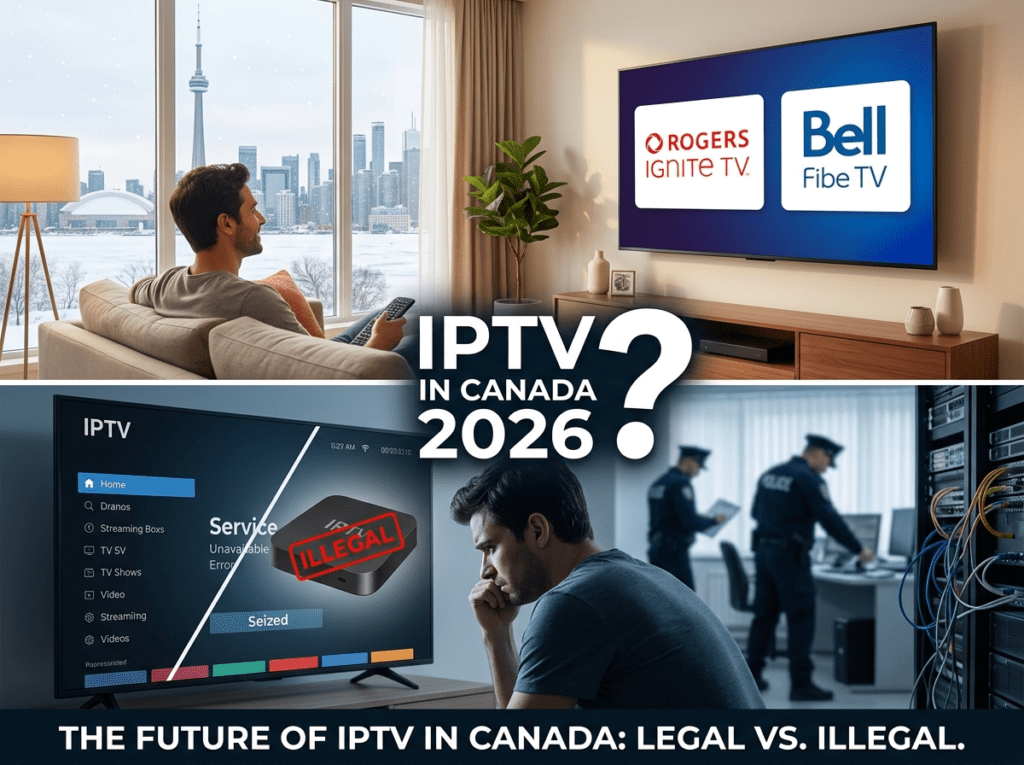
    Legal Considerations for IPTV Users in Canada

    As Canadians increasingly adopt IPTV services, understanding the legal landscape surrounding these platforms becomes crucial. IPTV, or Internet Protocol Television, operates within a complex legal framework that users should be aware of to ensure they are using these services legally and safely.

    Canadian Copyright Laws and IPTV

    Canadian copyright laws play a significant role in regulating IPTV services. These laws are designed to protect the intellectual property rights of content creators and distributors. IPTV providers must obtain the necessary licenses to broadcast copyrighted material. Users should be cautious when accessing content through IPTV services, as using unauthorized streams can infringe on these copyright laws.

    Key aspects of Canadian copyright law relevant to IPTV include:

    • Protection of original works, including TV shows and movies
    • Regulations around signal theft and unauthorized redistribution
    • Liability for users who access pirated content

    Recent Legal Developments

    The legal landscape for IPTV in Canada is continually evolving. Recent developments include increased enforcement against unauthorized IPTV services that distribute copyrighted content without permission. Canadian authorities have been working to shut down these illegal services and prosecute those involved in their operation.

    Notable recent actions include:

    Year Action Description
    2022 CRTC Enforcement Canadian Radio-television and Telecommunications Commission (CRTC) took action against several unauthorized IPTV services.
    2023 Copyright Law Amendments Amendments to Canadian copyright law aimed at strengthening protections for content creators.

    Protecting Yourself as a Consumer

    To protect yourself when using IPTV services in Canada, it’s essential to choose licensed and reputable providers. Research the provider’s legitimacy, check for user reviews, and ensure they have the necessary rights to distribute the content they offer.

    Tips for safe IPTV usage:

    • Verify the IPTV service is authorized to broadcast the content
    • Be cautious of services offering unusually low prices or “free” content
    • Keep your IPTV device and apps updated with the latest security patches

    Conclusion

    As we have explored throughout this article, IPTV services in Canada offer a range of options for consumers looking for flexible and affordable television viewing experiences. The various payment models, including monthly subscriptions, quarterly, and annual plans, cater to different user preferences and budgets.

    In our Canada IPTV summary, it’s clear that popular legal IPTV providers such as Bell Alt TV, Rogers Ignite TV, and Telus Optik TV offer a variety of channels and content. Meanwhile, gray market IPTV services present alternative options, albeit with associated risks.

    When considering IPTV final thoughts, it’s essential to weigh factors such as content libraries, resolution quality, and multi-device support when choosing a service. Additionally, understanding the legal considerations and potential hidden costs is crucial for making an informed decision.

    In conclusion, IPTV services in Canada provide a viable alternative to traditional cable television, offering flexibility and customization. By understanding the different payment models and service providers available, consumers can make informed choices that suit their viewing habits and budget, ultimately enhancing their television viewing experience.

    FAQ

    What is IPTV and how does it differ from traditional TV services?

    IPTV, or Internet Protocol Television, is a service that delivers television content over the internet, differing from traditional TV services that use satellite or cable broadcasts. IPTV services like Bell Fibe TV and Rogers Ignite TV offer a range of channels and on-demand content through a broadband connection.

    Are there different payment models available for IPTV services in Canada?

    Yes, there are various payment models available for IPTV services in Canada, including monthly subscriptions, quarterly and annual payment plans, and one-time payment services. Providers like Telus Optik TV and VMedia offer flexible payment options to suit different needs.

    Do I have to pay monthly for IPTV services in Canada?

    Not necessarily. While many IPTV services in Canada, such as Bell Alt TV, offer monthly subscription options, some providers also offer quarterly or annual payment plans, or even one-time payments for certain services.

    What factors affect IPTV pricing in Canada?

    IPTV pricing in Canada is influenced by several factors, including the size and quality of content libraries, resolution quality, streaming features, and the ability to support multiple devices and simultaneous streams. Providers like Rogers and Telus often charge more for premium services with advanced features.

    Are there any hidden costs associated with IPTV services?

    Yes, there can be hidden costs associated with IPTV services, including equipment requirements, internet bandwidth considerations, and additional fees or add-ons. For example, some providers may charge extra for HD or 4K content, or for additional devices connected to the service.
    How do I choose the right IPTV payment plan for my needs?

    To choose the right IPTV payment plan, assess your viewing habits, budget for entertainment services, and consider taking advantage of trial periods and promotional offers. Research different providers, such as VMedia or Bell, to find a plan that aligns with your viewing preferences and budget.

    What are the legal considerations for using IPTV services in Canada?

    Canadian copyright laws regulate IPTV services, and recent legal developments have targeted unauthorized IPTV providers. To protect yourself as a consumer, ensure you’re using a legitimate IPTV service, such as those offered by major telecom companies like Rogers or Telus.

    Can I get a refund or cancel my IPTV subscription?

    Cancellation policies vary by provider. Check your IPTV service’s terms and conditions to understand their cancellation and refund policies. Some providers, like Bell, may offer a satisfaction guarantee or promotional periods with flexible cancellation options.

    Are there any promotions or discounts available for new IPTV customers?

    Yes, many IPTV providers in Canada offer promotions or discounts for new customers. Keep an eye on the websites of providers like Telus or VMedia for limited-time offers, bundle deals, or special introductory rates.

  • 4K IPTV: Premium IPTV Service Across Canada 2026

    4K IPTV: Premium IPTV Service Across Canada 2026

    Experience the future of entertainment with our premium IPTV service now available across Canada. As we approach 2026, our 4K IPTV service is setting a new standard for television viewing, offering unparalleled picture quality and a vast array of channels and on-demand content.

    Our service is designed to provide a seamless viewing experience, with fast streaming and minimal buffering. Whether you’re watching your favorite sports team or the latest blockbuster, our IPTV service ensures that you’re always at the center of the action.

    Key Takeaways

    • Premium IPTV service available across Canada
    • 4K picture quality for an immersive viewing experience
    • Vast channel lineup and on-demand content library
    • Fast and reliable streaming
    • Seamless viewing experience with minimal buffering

    What is 4K IPTV and Why It’s Revolutionizing Canadian Entertainment

    The advent of 4K IPTV is transforming the Canadian entertainment landscape. This technology is not just an upgrade; it’s a revolution in how Canadians consume streaming content. With its ability to deliver high-quality, high-definition content, 4K IPTV is setting a new standard for entertainment.

    The Technology Behind 4K IPTV

    4K IPTV utilizes advanced internet protocol television technology to stream content in 4K resolution. This means that viewers can enjoy content with a resolution of 3840 pixels × 2160 lines, providing a much sharper and more detailed picture compared to standard HD. The technology relies on a stable and fast internet connection to deliver this high-quality content without interruptions.

    Benefits of 4K Resolution for Streaming Content

    The 4K resolution significantly enhances the viewing experience by offering more vivid colors, higher contrast, and a more immersive experience. For streaming content, this means that viewers can enjoy their favorite shows and movies with unprecedented clarity. This is particularly beneficial for nature documentaries, action movies, and sports events where detail is crucial.

    How 4K IPTV Transforms Your Viewing Experience

    4K IPTV transforms the viewing experience by providing a more engaging and interactive experience. With its high-quality video and potential for higher frame rates, it makes the viewer feel more connected to the content. Whether it’s a live sports event or a cinematic movie, 4K IPTV elevates the experience, making it feel more realistic and captivating.

    Our Premium 4K IPTV Service Overview

    Experience the future of television with our premium 4K IPTV service, offering unparalleled quality and content. Our service is designed to provide a superior viewing experience, leveraging the latest technology to bring you closer to the action.

    Cutting-Edge Features and Capabilities

    Our premium 4K IPTV service boasts cutting-edge features that enhance your viewing experience. With capabilities such as ultra-high definition and low latency, you can enjoy your favorite shows and movies like never before. Our service is optimized for the best possible viewing experience, ensuring that you never miss a moment.

    Feature Description Benefit
    4K Resolution Ultra-high definition streaming Immersive viewing experience
    Low Latency Real-time streaming Stay up-to-date with live events
    Multi-Device Support Access on various devices Watch anywhere, anytime

    Extensive Content Library and Channel Selection

    Our premium 4K IPTV service offers an extensive content library and diverse channel selection, catering to a wide range of interests. From the latest movies and TV shows to sports and news, there’s something for everyone. As one of our satisfied customers noted, “

    I’ve never seen such a wide variety of content available on one platform.

    Canadian Programming and Regional Content

    We understand the importance of Canadian programming and regional content. Our service includes a variety of Canadian channels and regional programming, ensuring that you stay connected to your community. With our premium 4K IPTV service, you can enjoy local news, sports, and entertainment from across Canada.

    By choosing our premium 4K IPTV service, you’re not just getting a TV service – you’re getting an enhanced entertainment experience that brings the best of Canada right into your home.

    Comprehensive Coverage Across Canadian Provinces and Territories

    Our 4K IPTV service is designed to provide comprehensive coverage across all Canadian provinces and territories. This means that whether you’re in a bustling city or a rural community, you can enjoy high-quality streaming.

    Urban Areas and High-Speed Connectivity

    In urban areas, our 4K IPTV service leverages high-speed internet connectivity to deliver seamless streaming experiences. With fast internet speeds, our service ensures that you can enjoy your favorite shows and movies without buffering or lag.

    Key benefits in urban areas include:

    • High-speed internet connectivity for smooth streaming
    • Access to a wide range of channels and content
    • Reliable service with minimal downtime

    Rural Coverage Solutions

    We understand that rural areas often face challenges with internet connectivity. To address this, we have implemented specialized solutions to ensure that our 4K IPTV service is available even in these areas.

    Our rural coverage solutions include:

    • Alternative internet connectivity options
    • Optimized streaming for lower internet speeds
    • Dedicated support for rural customers

    Service Availability Map and Expansion Plans

    To check the availability of our 4K IPTV service in your area, we provide an interactive service availability map on our website. We are continually expanding our service to reach more Canadians.

    Province/Territory Service Availability Planned Expansion
    Ontario Available Expanding to rural areas
    British Columbia Available Enhancing urban coverage
    Alberta Available Expanding to rural communities

    Subscription Plans and Pricing Options

    Our 4K IPTV service offers a range of subscription plans to suit different viewing needs across Canada. Whether you’re a casual viewer or a sports enthusiast, we have a plan that’s right for you.

    Monthly Subscription Details

    Our monthly subscription plans start at $29.99 for access to over 500 channels, including sports, news, and entertainment. This plan is perfect for those who want flexibility without a long-term commitment.

    Annual Plans and Savings

    For those looking to save, our annual plans are priced at $299.99, offering a discount of over 17% compared to monthly payments. This plan is ideal for viewers who plan to enjoy 4K IPTV throughout the year.

    Special Bundles and Promotions

    We occasionally offer special bundles and promotions, such as free trials or discounted rates for new customers. Keep an eye on our website for the latest offers. For instance, new subscribers can enjoy a 30-day free trial, allowing them to experience our service risk-free.

    Payment Methods and Flexibility

    We accept various payment methods, including major credit cards and PayPal, ensuring a secure and convenient transaction process. Our flexible payment options mean you can choose the plan that best suits your budget and viewing habits.

    Plan Type Price Features
    Monthly $29.99 500+ channels, 4K streaming
    Annual $299.99 Save 17%, 500+ channels, 4K streaming

    Technical Requirements for Optimal 4K IPTV Experience

    To enjoy the full benefits of 4K IPTV, it’s crucial to understand the technical requirements that ensure a seamless viewing experience. A robust and reliable internet connection, compatible devices, and an optimized network setup are key to unlocking the potential of 4K IPTV.

    Internet Speed Requirements

    A stable internet connection with sufficient speed is critical for 4K IPTV streaming. A minimum internet speed of 25 Mbps is recommended for 4K content streaming. However, for multiple device streaming or heavy internet usage, consider higher speeds.

    Streaming Quality Recommended Internet Speed
    4K 25 Mbps
    Multiple 4K Streams 50 Mbps or higher

    Compatible Devices and Equipment

    To stream 4K IPTV, you’ll need compatible devices. Popular options include smart TVs from brands like Samsung and LG, streaming devices such as Roku and Amazon Fire TV, and mobile devices running iOS or Android.

    Recommended Network Setup for Uninterrupted Streaming

    For uninterrupted 4K IPTV streaming, a strong and stable network is essential. Consider using a wired Ethernet connection for your main streaming devices and ensure your router is placed in a central location to minimize interference.

    Multi-Device Streaming and Mobile Compatibility

    With our 4K IPTV service, you can enjoy seamless streaming across multiple devices, ensuring a flexible viewing experience. This means you can watch your favorite shows and movies on the device of your choice, whether it’s a smart TV, tablet, smartphone, or streaming device.

    Simultaneous Streaming Capabilities

    Our 4K IPTV service allows for simultaneous streaming on multiple devices, making it ideal for families or households with multiple viewers. You can watch different channels or content on different devices at the same time without any compromise on quality.

    Device Streaming Capability Maximum Simultaneous Streams
    Smart TV 4K Streaming 2
    Smartphone/Tablet HD/4K Streaming 3
    Streaming Device 4K Streaming 2

    Mobile Apps and On-the-Go Viewing

    Our mobile app is designed to provide a seamless viewing experience on smartphones and tablets. With the app, you can watch your favorite content on the go, ensuring that you never miss a moment of your favorite shows or live events.

    Smart TV and Streaming Device Integration

    Our 4K IPTV service is compatible with a range of smart TVs and streaming devices, making it easy to integrate into your existing entertainment setup. Whether you use Roku, Amazon Fire TV, or Apple TV, our service ensures a smooth and high-quality viewing experience.

    Easy Setup and Installation Process

    Setting up your 4K IPTV service is a straightforward process that can be completed in just a few steps. Our service is designed to be user-friendly, ensuring that you can start enjoying premium content quickly.

    Self-Installation Guide

    For those who prefer a DIY approach, our self-installation guide is comprehensive and easy to follow. Simply download the guide, follow the step-by-step instructions, and you’ll be streaming in no time. The guide covers everything from connecting your device to configuring your network settings.

    Professional Installation Services

    If you prefer a hassle-free experience, our professional installation services are available. Our expert technicians will handle the setup and ensure that everything is working correctly. This service is ideal for those who are not tech-savvy or prefer the convenience of having someone else do the installation.

    Troubleshooting Common Setup Issues

    While our setup process is designed to be smooth, occasional issues may arise. Common problems include connectivity issues or device compatibility. Our troubleshooting guide provides solutions to these common issues, helping you to resolve problems quickly and get back to streaming.

    How 4K IPTV Compares to Traditional Cable and Satellite Services

    The rise of 4K IPTV is challenging the status quo of traditional cable and satellite TV in Canada. As the demand for high-quality streaming services grows, Canadians are increasingly comparing their options to find the best fit for their viewing needs.

    Cost Comparison Analysis

    One of the primary factors influencing Canadians’ choice of TV service is cost. 4K IPTV often offers more competitive pricing than traditional cable and satellite services. For instance, a typical 4K IPTV subscription can range from $20 to $50 per month, whereas cable and satellite services can cost upwards of $100 per month. According to a recent survey, over 70% of Canadians consider cost a significant factor when choosing a TV service provider.

    Content and Quality Differences

    The quality of content is another crucial aspect. 4K IPTV provides high-definition content with resolutions up to 3840 x 2160 pixels, significantly surpassing the quality offered by many traditional cable and satellite services. As noted by a industry expert, “The shift to 4K is not just about resolution; it’s about a superior viewing experience.” This enhanced viewing experience is a key selling point for 4K IPTV.

    Flexibility and Customization Advantages

    4K IPTV services offer greater flexibility and customization options compared to traditional TV services. Subscribers can often choose from a variety of channel packages and on-demand content, tailoring their viewing experience to their preferences. This flexibility is particularly appealing to Canadians who value personalized entertainment options.

    Why Canadians Are Switching to 4K IPTV

    Canadians are switching to 4K IPTV for several reasons, including its cost-effectiveness, superior content quality, and flexibility. As one satisfied customer noted, “

    4K IPTV has revolutionized our home entertainment. The picture quality is stunning, and the flexibility to choose what we watch is unbeatable.

    ” Such testimonials highlight the growing preference for 4K IPTV over traditional TV services.

    Customer Support and Service Reliability

    At the heart of our 4K IPTV service is a commitment to unparalleled customer support and service reliability. We understand that a seamless viewing experience is crucial for our customers, and we have designed our support systems to ensure that help is always available when needed.

    24/7 Technical Support Options

    Our technical support team is available 24/7 to address any issues or concerns our customers may have. Whether it’s a question about our service, a problem with connectivity, or assistance with equipment, our dedicated support staff are trained to provide prompt and effective solutions. We offer multiple channels for support, including phone, email, and live chat, ensuring that customers can choose the method that best suits their needs.

    Service Uptime and Reliability Measures

    We pride ourselves on the reliability of our 4K IPTV service, with measures in place to ensure maximum uptime. Our infrastructure is designed to provide a stable and consistent streaming experience, with redundant systems and backup power sources to mitigate the risk of service interruptions. We continuously monitor our network to identify and resolve potential issues before they affect our customers.

    Service Aspect Reliability Measure Benefit to Customer
    Network Infrastructure Redundant Systems Minimized Service Interruptions
    Monitoring Continuous Network Surveillance Proactive Issue Resolution
    Support Availability 24/7 Technical Support Assistance Always Available

    Customer Testimonials and Success Stories

    Our commitment to customer support and service reliability has earned us a loyal customer base. Many of our customers have shared their positive experiences with our service, praising our responsive support team and the high quality of our 4K IPTV streams. We are proud to have built a reputation for reliability and customer satisfaction in the Canadian market.

    By focusing on customer support and service reliability, we aim to provide the best possible 4K IPTV experience for Canadians. Our dedication to these values is reflected in our robust support infrastructure and our proactive approach to ensuring service uptime.

    The Future of 4K IPTV in Canada: 2026 and Beyond

    The landscape of Canadian entertainment is on the cusp of a revolution with advancements in 4K IPTV technology. As we look towards 2026 and beyond, several factors are poised to shape the industry.

    Upcoming Technological Advancements

    The future of 4K IPTV in Canada will be significantly influenced by technological advancements. Improvements in internet infrastructure, such as the rollout of 5G networks and fiber-optic connectivity, will enhance streaming quality and reliability. Additionally, advancements in compression technology will allow for more efficient data transfer, reducing buffering times and improving overall user experience.

    Predicted Market Growth and Service Expansion

    As market growth continues, we can expect to see an expansion of 4K IPTV services across Canada. This growth will be driven by increasing demand for high-quality streaming options and the proliferation of smart TVs and streaming devices. Service providers are likely to expand their content offerings and improve their services to remain competitive.

    Evolving Content Delivery and Viewing Trends

    Evolving content delivery trends will also play a crucial role in shaping the future of 4K IPTV. There’s a growing trend towards personalized content and interactive viewing experiences. Furthermore, the integration of artificial intelligence and machine learning will enable more tailored recommendations and enhanced user interfaces.

    Trend Description Impact
    Technological Advancements Improvements in internet infrastructure and compression technology Enhanced streaming quality and reliability
    Market Growth Expansion of 4K IPTV services across Canada Increased competition and improved services
    Evolving Content Delivery Personalized content and interactive viewing experiences More engaging user experiences

    Conclusion: Elevate Your Entertainment Experience with Premium 4K IPTV

    As we’ve explored throughout this article, premium 4K IPTV is revolutionizing the way Canadians enjoy their favorite TV shows, movies, and sports. With its cutting-edge technology, extensive content library, and comprehensive coverage across Canada, this service is poised to elevate your entertainment experience to new heights.

    By opting for premium 4K IPTV, you’re not just choosing a service – you’re unlocking a world of crystal-clear visuals, immersive audio, and unparalleled flexibility. Whether you’re watching your favorite series on a smart TV, streaming live sports on a mobile device, or enjoying a movie night with family, premium 4K IPTV ensures that every moment is more engaging and enjoyable.

    With competitive pricing, flexible subscription plans, and robust customer support, making the switch to premium 4K IPTV is easier than ever. Experience the future of television today and discover a new standard of entertainment that will keep you entertained for years to come.

    FAQ

    What is 4K IPTV and how does it work?

    4K IPTV is a streaming service that delivers high-definition content over the internet, using Internet Protocol Television technology to provide a superior viewing experience with crystal-clear visuals and immersive audio.

    Is 4K IPTV available across Canada?

    Yes, our 4K IPTV service is available across various Canadian provinces and territories, including urban and rural areas, with comprehensive coverage and high-speed connectivity.

    What are the technical requirements for 4K IPTV?

    To enjoy 4K IPTV, you need a stable internet connection with a minimum speed of 25 Mbps, a compatible 4K-enabled device, and our IPTV service subscription.

    Can I stream 4K IPTV on multiple devices simultaneously?

    Yes, our 4K IPTV service allows simultaneous streaming on multiple devices, including smart TVs, smartphones, tablets, and streaming devices, providing flexibility and convenience.

    How do I set up 4K IPTV?

    You can set up 4K IPTV using our self-installation guide or by opting for our professional installation services, ensuring a seamless and hassle-free experience.

    What subscription plans are available for 4K IPTV?

    We offer various subscription plans, including monthly and annual options, as well as special bundles and promotions, providing flexibility and savings for our customers.

    How does 4K IPTV compare to traditional cable and satellite services?

    4K IPTV offers superior content quality, flexibility, and customization advantages, making it a more attractive option for Canadians looking for a premium entertainment experience.

    What kind of customer support does 4K IPTV offer?

    Our 4K IPTV service provides 24/7 technical support, ensuring prompt assistance and resolving any issues, along with a commitment to service reliability and customer satisfaction.

    Are there any additional fees for 4K IPTV?

    There are no hidden fees; our pricing is transparent, and you can choose from various plans to suit your budget, with options for additional features and services.

    Can I cancel or change my 4K IPTV subscription plan?

    Yes, you can cancel or modify your subscription plan at any time, with flexible payment options and no long-term contracts, providing you with control over your service.

  • What is the Best Free IPTV Player in Canada?

    What is the Best Free IPTV Player in Canada?

    Best Free IPTV Player? Internet Protocol Television (IPTV) is revolutionizing the way Canadians consume television content. IPTV technology allows users to stream television programs and movies directly to their devices via the internet.

    Canadians are increasingly looking for free IPTV solutions due to the flexibility and variety they offer. With the rise of cord-cutting, IPTV has become a popular alternative to traditional TV services.

    As the demand for IPTV grows, so does the need for reliable and user-friendly IPTV players. In this article, we will explore the best options available for Canadians.

    Key Takeaways

    • Understanding IPTV and its benefits
    • Why Canadians are opting for IPTV
    • Features to look for in an IPTV player
    • Popular IPTV players in Canada
    • How to choose the best IPTV player for your needs

    Understanding IPTV and Its Growing Popularity in Canada

    Best Free IPTV Player

    As Canadians seek more personalized viewing experiences, IPTV technology has emerged as a leading solution. IPTV, or Internet Protocol Television, is revolutionizing the way people consume television content. Unlike traditional broadcast methods, IPTV streams content directly to your device via the internet.

    What Exactly is IPTV Technology?

    IPTV technology delivers television content over the internet, allowing for a more personalized viewing experience. This is achieved through a stable internet connection, which enables users to access a wide range of channels and on-demand content. The key benefits of IPTV include:

    • Flexibility in viewing options
    • Access to a broader range of content
    • The ability to watch content on various devices

    Why Canadians Are Turning to IPTV Solutions

    Canadians are turning to IPTV solutions for several reasons. Firstly, IPTV offers a more customizable viewing experience compared to traditional TV services. Users can choose from a variety of packages and add-ons tailored to their preferences. Secondly, IPTV services often provide better quality streaming, with less likelihood of interruptions or poor reception.

    According to a recent survey, many Canadians appreciate the flexibility that IPTV streaming offers, allowing them to watch their favorite shows and movies on their own schedule. As internet speeds continue to improve across the country, the appeal of IPTV is likely to grow.

    Legal Considerations for IPTV Usage in Canada

    As IPTV continues to gain popularity in Canada, understanding the legal landscape surrounding its use becomes increasingly important. IPTV, or Internet Protocol Television, allows users to stream television content over the internet, but this technology is subject to various legal regulations.

    Copyright Laws and IPTV in Canadian Context

    Canadian copyright laws protect original content, including TV shows and movies distributed through IPTV services. Users must ensure they are accessing content from authorized sources to comply with these laws.

    Distinguishing Between Legal and Illegal IPTV Content

    Legal IPTV content is provided by licensed services that have obtained the necessary permissions to distribute the content. Users should be cautious of services that offer unusually cheap or extensive content libraries, as these may be operating illegally.

    IPTV Service Type Legal Status
    Licensed IPTV Providers Legal
    Pirate IPTV Services Illegal

    Key Features to Look for in an IPTV Player

    When selecting an IPTV player, Canadians should consider several crucial features to ensure a seamless viewing experience. The ideal IPTV player should balance functionality with user-friendliness.

    User Interface and Experience

    A well-designed user interface is essential for easy navigation and access to content. Look for an IPTV player with an intuitive interface that allows you to quickly find and play your desired channels or content.

    Format Support and Compatibility

    Ensure the IPTV player supports a wide range of media formats to accommodate different types of content. Compatibility with various devices and operating systems is also crucial.

    Performance and Stability

    A stable and high-performance IPTV player is vital for uninterrupted streaming. Opt for a player known for its reliability and minimal buffering.

    Canadian Content Accessibility

    For Canadians, access to local content is a priority. Choose an IPTV player that offers easy access to Canadian channels and content.

    Feature Importance Example
    User Interface High Simple, intuitive design
    Format Support High Supports multiple media formats
    Performance High Minimal buffering, stable
    Canadian Content Medium Access to local Canadian channels

    VLC Media Player: The Versatile Classic

    For Canadians looking for a free IPTV player, VLC Media Player is a top contender worth considering. Known for its versatility and wide range of features, VLC has been a staple in media playback for years.

    Overview and Capabilities

    VLC Media Player is renowned for its ability to play a vast array of media formats without the need for additional codecs. Its cross-platform compatibility and open-source nature make it a favorite among users. VLC’s capabilities extend beyond standard media playback, offering features that are particularly useful for IPTV.

    IPTV-Specific Features

    VLC supports IPTV streams through various protocols, including HTTP, RTP, and UDP. Users can easily open IPTV streams by providing the stream URL. Additionally, VLC allows users to save and manage playlists, making it convenient to organize multiple IPTV channels.

    Pros and Cons for Canadian Users

    The pros of using VLC for IPTV include its free and open-source nature, broad format support, and user-friendly interface. However, some users may find the abundance of features overwhelming, and the player may not always be the most stable for IPTV streams.

    Setup Guide for Canadian Channels

    To set up VLC for IPTV, users need to open the network stream option and input their IPTV stream URL. VLC also supports EPG (Electronic Program Guide) for a more comprehensive viewing experience. Canadian users can configure VLC to access their preferred IPTV channels by following a simple setup process.

    Kodi: The Customizable Powerhouse

    For Canadians seeking flexibility in their IPTV experience, Kodi stands out as a versatile and powerful solution. Kodi’s open-source nature allows users to customize their viewing experience extensively, making it a popular choice for IPTV enthusiasts.

    IPTV Integration Options

    Kodi offers robust IPTV integration capabilities through various add-ons, allowing users to access a wide range of IPTV services. These add-ons can be easily installed from the Kodi repository or third-party sources, providing users with a seamless IPTV experience.

    Add-ons Available in Canada

    Canadian users can access a variety of IPTV add-ons tailored to their region. Popular add-ons include those that provide access to Canadian sports channels, news networks, and entertainment services. These add-ons are regularly updated to ensure compliance with Canadian broadcasting regulations.

    Strengths and Limitations

    Strengths: Kodi’s customization options, extensive add-on library, and cross-platform compatibility make it a highly adaptable IPTV solution. Limitations: The need for technical knowledge to set up and maintain Kodi, as well as potential legal considerations regarding add-on sources, are important factors to consider.

    Canadian Content Access

    Kodi provides Canadian users with access to a broad spectrum of local content, including sports, news, and entertainment channels. By leveraging the right IPTV add-ons, users can enjoy a comprehensive viewing experience that caters to their specific needs.

    By understanding Kodi’s capabilities and limitations, Canadian users can make informed decisions about using this powerful IPTV platform.

    Perfect Player: Designed for IPTV Excellence

    For Canadians seeking a seamless IPTV experience, Perfect Player is a strong contender. This IPTV player is designed with the user in mind, offering a comprehensive streaming solution that caters to the diverse needs of Canadian viewers.

    Interface and User Experience

    Perfect Player boasts an intuitive interface that makes navigating through channels and settings effortless. The user-friendly design ensures that even those who are not tech-savvy can easily access their favorite Canadian channels and enjoy a smooth viewing experience.

    Setup Process for Canadian Channels

    Setting up Perfect Player for Canadian channels is straightforward. Users can easily configure the player to access their preferred IPTV sources, making it a convenient option for those looking to stream Canadian content.

    Performance Analysis

    In terms of performance, Perfect Player delivers stable and high-quality streaming. The player’s ability to handle various IPTV formats and protocols ensures that Canadian users can enjoy uninterrupted viewing.

    Canadian User Reviews

    Canadian users have praised Perfect Player for its reliability and feature-rich interface. Reviews highlight the player’s ability to provide consistent streaming quality and its compatibility with a wide range of IPTV services.

    Feature Description User Rating
    Interface User-friendly and intuitive 4.5/5
    Setup Process Easy configuration for Canadian channels 4.7/5
    Performance Stable and high-quality streaming 4.8/5

    The Best Free IPTV Player Options for Different Devices

    Canadians looking for IPTV solutions can choose from a variety of free players tailored to their devices. The diversity in IPTV players ensures that users can enjoy their preferred content across different platforms.

    Top Choices for Windows and Mac

    For Windows and Mac users, some of the top IPTV players include VLC Media Player and Perfect Player. VLC is renowned for its versatility and compatibility with various formats, while Perfect Player is designed specifically for IPTV, offering a streamlined experience.

    Android and iOS Solutions

    On Android and iOS devices, users can opt for IPTV players like GSE Smart IPTV and MyIPTV Player. These apps are designed to provide a seamless IPTV experience on mobile devices, with features such as EPG (Electronic Program Guide) and playlist management.

    Smart TV Compatible Players

    For Smart TVs, the options may vary depending on the TV’s operating system. Players like Kodi are popular among Smart TV users due to their extensive customization capabilities and wide range of add-ons.

    Canadian ISP Compatibility Considerations

    When choosing an IPTV player, Canadians should also consider the compatibility with their Internet Service Provider (ISP). Most IPTV players are designed to work with any ISP, but it’s essential to check for any specific requirements or recommendations from the player manufacturer.

    Device Recommended IPTV Player Key Features
    Windows VLC Media Player Multi-format support, user-friendly interface
    Android GSE Smart IPTV EPG support, playlist management
    Smart TV Kodi Customizable, wide range of add-ons

    By considering the device and ISP compatibility, Canadians can select the best free IPTV player that suits their viewing needs.

    GSE Smart IPTV: Mobile-Friendly Solution

    With the rise of mobile streaming, GSE Smart IPTV has emerged as a strong contender in the Canadian IPTV market. This mobile-friendly solution is designed to provide users with a seamless IPTV experience on their smartphones and tablets.

    Features and Functionality

    GSE Smart IPTV boasts an impressive array of features, including support for multiple IPTV sources, easy playlist management, and a user-friendly interface. It allows users to organize their favorite channels into custom playlists, making it easier to access Canadian content.

    Canadian Content Access

    One of the key advantages of GSE Smart IPTV is its ability to access Canadian content. Users can enjoy a wide range of Canadian channels and on-demand content, making it an attractive option for those looking for a comprehensive IPTV solution.

    User Experience Review

    The user experience with GSE Smart IPTV is generally positive, with users praising its intuitive interface and stable performance. The app’s ability to handle various IPTV formats and its compatibility with different devices contribute to its high user satisfaction ratings.

    Mobile Performance on Canadian Networks

    GSE Smart IPTV performs well on Canadian mobile networks, providing smooth streaming and minimal buffering. This makes it an excellent choice for Canadians who want to enjoy their favorite TV shows and sports on the go.

    MyIPTV Player and Other Canadian-Friendly Alternatives

    While popular IPTV players are well-known, Canadian users may find that lesser-known alternatives like MyIPTV Player better suit their specific needs. Exploring these options can reveal unique features tailored to Canadian viewers.

    Overview of Lesser-Known Options

    MyIPTV Player is one such alternative that has gained traction among Canadian users. It offers a straightforward interface and supports a wide range of IPTV formats, making it a versatile choice.

    Canadian-Specific Features

    One of the standout features of MyIPTV Player is its ability to handle Canadian IPTV content efficiently. It allows users to easily access and manage their favorite Canadian channels and on-demand content.

    Comparison with Mainstream Players

    Compared to more mainstream IPTV players, MyIPTV Player offers a more streamlined experience for Canadian users. Its focus on simplicity and compatibility with Canadian IPTV services sets it apart.

    In conclusion, MyIPTV Player and similar alternatives provide Canadian users with more tailored IPTV solutions. By exploring these options, viewers can find the best fit for their streaming needs.

    Setting Up Your IPTV Player: Step-by-Step Guide

    Configuring your IPTV player correctly is the first step towards enjoying uninterrupted streaming of your favorite Canadian channels. A well-set-up IPTV player ensures that you can access a wide range of content without buffering or connectivity issues.

    Finding Reliable IPTV Sources in Canada

    The first step in setting up your IPTV player is to find a reliable IPTV source. Canadians have several options, including various IPTV service providers that offer Canadian channels. When selecting an IPTV source, consider factors like channel lineup, streaming quality, and customer support.

    Configuration Best Practices

    Once you have chosen your IPTV source, follow these configuration best practices:

    • Ensure your IPTV player is updated to the latest version.
    • Enter the IPTV source details correctly, including the server URL and any required login credentials.
    • Adjust the buffer settings according to your internet connection speed.

    Troubleshooting Common Issues

    Common issues with IPTV players include buffering, freezing, and channel not found errors. To troubleshoot these issues, check your internet connection speed, restart your IPTV player, or adjust the buffer settings.

    Optimizing for Canadian Internet Services

    To optimize your IPTV player for Canadian internet services, ensure that your internet plan can handle the streaming quality you desire. Some IPTV players also offer settings to prioritize certain internet services or adjust streaming quality based on your connection.

    IPTV Player Feature Description Benefit
    Buffer Settings Adjusts the buffer size according to internet speed Reduces buffering and improves streaming quality
    Channel Lineup Offers a variety of Canadian channels Provides access to a wide range of content
    Customer Support Assistance from IPTV service providers Helps resolve issues quickly

    Security and Privacy Considerations for Canadian IPTV Users

    IPTV users in Canada face a unique set of security and privacy challenges that can be mitigated with the right knowledge and tools. As the popularity of IPTV continues to grow, it’s essential for users to understand the potential risks and how to protect themselves.

    Protecting Your Data While Streaming

    When using IPTV services, your data is at risk of being intercepted or misused. To safeguard your information, it’s crucial to use secure connections and be cautious when providing personal details.

    Use encryption and secure protocols to protect your data. Be aware of the privacy policies of your IPTV provider.

    VPN Usage with IPTV Players in Canada

    A Virtual Private Network (VPN) can significantly enhance your security while streaming IPTV. By encrypting your internet traffic, a VPN helps protect your data from being intercepted.

    “Using a VPN is like putting your internet activity in a secure box; it protects you from unwanted eyes.”

    Avoiding Malware and Suspicious Sources

    To avoid malware, only download IPTV players and content from reputable sources. Be cautious of links and attachments from unknown senders.

    • Verify the authenticity of the IPTV service.
    • Keep your antivirus software up to date.

    Canadian Privacy Laws and Streaming

    Canada has specific privacy laws, such as PIPEDA, that regulate how personal information is collected and used. IPTV users should be aware of these laws and how they apply to streaming.

    Law/Regulation Description Impact on IPTV
    PIPEDA Protects personal information. IPTV providers must comply.
    CASL Regulates commercial electronic messages. Applies to promotional emails from IPTV services.

    By understanding these security and privacy considerations, Canadian IPTV users can enjoy a safer and more secure streaming experience.

    Conclusion: Choosing the Right Free IPTV Player for Your Needs

    Selecting the ideal free IPTV player can be a daunting task, given the numerous options available in the Canadian market. When choosing an IPTV player, it’s essential to consider several factors, including legality, features, and security.

    The best IPTV for Canada should offer a seamless viewing experience, with a user-friendly interface and robust performance. Players like VLC Media Player, Kodi, and Perfect Player have been discussed in detail, highlighting their strengths and weaknesses.

    When opting for a free IPTV player, Canadians should prioritize services that comply with copyright laws and provide access to a wide range of Canadian content. Ensuring the security of your data while streaming is also crucial, and using a VPN can significantly enhance your online privacy.

    By weighing the pros and cons of each IPTV player and considering your specific needs, you can make an informed decision and enjoy a superior streaming experience. Whether you’re looking for a versatile media player or a dedicated IPTV solution, there’s a perfect option waiting for you in the Canadian market.

    FAQ

    What is IPTV and how does it work?

    IPTV, or Internet Protocol Television, is a service that delivers television programming through the internet rather than traditional satellite or cable formats. It works by streaming content directly to your device via an internet connection, allowing for more flexibility and customization in viewing experiences.

    Are free IPTV players legal in Canada?

    The legality of free IPTV players in Canada depends on their usage. The players themselves are generally legal, but accessing copyrighted content without permission is not. It’s crucial to use these players with legitimate IPTV sources that have the necessary rights to distribute the content.

    What features should I look for in an IPTV player?

    When choosing an IPTV player, consider features such as user interface, format support, performance, and the availability of Canadian content. A good IPTV player should be user-friendly, support multiple formats, be stable, and provide access to the channels you want.

    Can I use VLC Media Player as an IPTV player?

    Yes, VLC Media Player can be used as an IPTV player. It supports various formats and has features that allow it to stream IPTV content. However, you’ll need to configure it with your IPTV source, and it may require some technical knowledge.

    How do I ensure my IPTV player is secure?

    To ensure your IPTV player is secure, use a reputable player, keep your software up to date, and be cautious with the sources you use for IPTV content. Using a VPN can also help protect your privacy while streaming.

    What is the best IPTV player for Android devices?

    Some of the best IPTV players for Android include GSE Smart IPTV and Perfect Player. They offer a range of features, are user-friendly, and have good performance on Android devices.

    Can I access Canadian content with any IPTV player?

    While many IPTV players can access Canadian content, the availability of specific channels depends on the IPTV source you’re using. Some players and sources are more geared towards Canadian content than others.

    Do I need a VPN to use an IPTV player?

    Using a VPN with an IPTV player can enhance your privacy and security by encrypting your internet traffic. It’s not strictly necessary but is recommended, especially if you’re accessing content from sources that may not be entirely legitimate.

    How do I troubleshoot common issues with my IPTV player?

    Common issues with IPTV players can often be resolved by checking your internet connection, ensuring your player software is up to date, and verifying that your IPTV source is working correctly. Restarting your device or reinstalling the player can also sometimes resolve issues.

  • Is IPTV shut down in Canada 2026?

    Is IPTV shut down in Canada 2026?

    IPTV shut down in Canada: The world of television is rapidly evolving, and Internet Protocol Television (IPTV) has become a popular choice for many Canadians.

    As of 2026, the status of IPTV in Canada is a topic of much discussion. With the rise of streaming services, concerns about IPTV regulations have grown.

    The Canadian government has been working to establish clear guidelines for IPTV services operating within the country.

    This article aims to provide an overview of the current IPTV situation in Canada and what it means for consumers.

    Key Takeaways

    • Understanding the current status of IPTV in Canada
    • Exploring the impact of IPTV regulations on consumers
    • Discussing the future of IPTV in Canada
    • Examining the role of government in shaping IPTV policies
    • Identifying the benefits and drawbacks of IPTV services

    What is IPTV and How Does It Work?

    IPTV technology allows users to stream television content over the internet, offering a flexible alternative to traditional broadcasting methods. This shift has significant implications for how Canadians consume media.

    Definition and Technology Behind IPTV

    IPTV, or Internet Protocol Television, uses internet protocol to deliver TV content. Unlike traditional satellite or cable TV, IPTV streams content directly over the internet, allowing for more personalized viewing experiences. The technology behind IPTV involves a complex system of servers, networks, and user devices, all working together to provide a seamless viewing experience.

    Different Types of IPTV Services

    There are several types of IPTV services available in Canada, including:

    • Live TV: Streams live television channels over the internet.
    • Video on Demand (VOD): Allows users to select and watch content at their convenience.
    • Catch-up TV: Enables viewers to watch previously aired content.

    Popularity of IPTV in Canada

    IPTV has gained significant popularity in Canada due to its flexibility and the wide range of content it offers. Canadians appreciate the ability to access television programming without being tied to a traditional cable or satellite subscription. As internet speeds continue to improve across the country, the adoption of IPTV services is expected to grow.

    The flexibility and variety of IPTV services are key factors in their increasing popularity among Canadian consumers.

    Current Legal Status of IPTV in Canada

    IPTV services in Canada operate within a legal environment shaped by broadcasting laws and copyright regulations. The legal framework governing IPTV is multifaceted, involving various stakeholders and regulatory bodies.

    Canadian Broadcasting Laws

    Canadian broadcasting laws play a crucial role in regulating IPTV services. The Broadcasting Act is a key piece of legislation that outlines the framework for broadcasting in Canada, including IPTV. This Act aims to ensure that broadcasting services, including IPTV, contribute to the Canadian broadcasting system and promote Canadian content.

    Copyright Regulations Affecting IPTV

    Copyright regulations significantly impact IPTV services in Canada. IPTV providers must comply with the Copyright Act, which governs the use and distribution of copyrighted content. This includes obtaining necessary licenses and permissions for the content they distribute. Non-compliance can result in significant penalties.

    CRTC’s Role in IPTV Regulation

    The Canadian Radio-television and Telecommunications Commission (CRTC) is the primary regulatory body overseeing IPTV services in Canada. The CRTC is responsible for enforcing broadcasting laws and regulations, including those related to IPTV. This involves licensing IPTV services, monitoring compliance, and addressing consumer complaints.

    The CRTC’s regulatory approach aims to balance the need to promote Canadian content and protect consumer interests with the need to foster a competitive and innovative IPTV market.

    Recent Crackdowns on Illegal IPTV Services

    Recent months have seen a significant crackdown on unauthorized IPTV providers in Canada. This intensified effort by Canadian authorities aims to curb the growing issue of illegal IPTV services, which have been gaining popularity among consumers looking for affordable alternatives to traditional TV broadcasting.

    Major Legal Cases in Canada

    Several high-profile cases have highlighted the Canadian government’s stance on illegal IPTV services. For instance, a notable case involved a major IPTV service provider being sued by a coalition of Canadian broadcasters for copyright infringement. The court’s ruling in favor of the broadcasters set a significant precedent, leading to increased scrutiny of other IPTV services.

    Enforcement Actions by Canadian Authorities

    Canadian authorities, including the Canadian Radio-television and Telecommunications Commission (CRTC), have been actively taking enforcement actions against illegal IPTV services. These actions include shutting down unauthorized services and prosecuting individuals involved in providing these services. The CRTC has also been working closely with international partners to combat the global nature of IPTV piracy.

    Penalties for IPTV Providers and Users

    The penalties for both IPTV providers and users can be severe. Providers found guilty of copyright infringement can face significant fines and even imprisonment. Users, while generally not targeted as heavily, can still face legal consequences for subscribing to illegal IPTV services. A summary of the penalties is provided in the table below:

    Offense Penalty
    Copyright Infringement by Providers Fines up to $1 million, imprisonment up to 5 years
    Subscribing to Illegal IPTV Services Fines, potential legal action

    The crackdown on illegal IPTV services in Canada reflects a broader effort to protect intellectual property and ensure compliance with broadcasting regulations. As the landscape continues to evolve, both providers and consumers must stay informed about the legal implications of IPTV services.

    The IPTV Shut Down in Canada: Current Developments

    Canada’s IPTV market is at a crossroads as new regulations threaten to shut down illegal services. The Canadian government has been tightening its regulations around IPTV services, aiming to curb illegal broadcasting and protect copyright holders.

    Recent Legislative Changes

    Recent legislative changes have been pivotal in shaping the IPTV landscape in Canada. Bill C-11, also known as the Online Streaming Act, has introduced new compliance requirements for IPTV service providers. As

    “The government is committed to ensuring that online streaming services contribute to the Canadian media landscape,”

    said a government official, highlighting the focus on regulating online content.

    Industry Response to Regulations

    The IPTV industry has responded to these regulations with a mix of compliance and resistance. Some providers have begun adapting to the new laws, while others have pushed back against what they see as overly stringent requirements. Licensed IPTV providers are working closely with regulatory bodies to ensure they meet the new standards.

    Timeline of Enforcement Actions

    Enforcement actions against illegal IPTV services have been on the rise. Key milestones include:

    • January 2023: CRTC begins cracking down on non-compliant IPTV services.
    • June 2023: Major legal case against an illegal IPTV provider sets a precedent.
    • January 2024: New regulations come into full effect, leading to a significant reduction in illegal IPTV services.

    The industry continues to evolve as it adapts to these changes, with a clear shift towards legitimate, licensed IPTV services.

    Bill C-11 and Its Impact on IPTV Services

    Bill C-11, also known as the Online Streaming Act, is set to revolutionize the IPTV landscape in Canada. This legislation aims to bring online streaming services under the same regulatory framework as traditional broadcasters.

    Key Provisions of the Online Streaming Act

    The Online Streaming Act includes several key provisions that will affect IPTV services. These include:

    • Regulatory Oversight: Bringing IPTV services under the purview of the Canadian Radio-television and Telecommunications Commission (CRTC).
    • Content Requirements: Mandating that IPTV services promote Canadian content and adhere to specific programming quotas.
    • Discovery Requirements: Ensuring that Canadian content is discoverable on IPTV platforms.

    Implementation Timeline

    The implementation of Bill C-11 will be phased, with different provisions coming into effect at different times. The CRTC will play a crucial role in determining the specific timelines and requirements for compliance.

    Provision Effective Date Compliance Requirement
    Regulatory Oversight January 2024 Registration with CRTC
    Content Requirements June 2024 30% Canadian content quota
    Discovery Requirements December 2024 Prominent display of Canadian content

    Compliance Requirements for Service Providers

    IPTV service providers will need to comply with the new regulations by adapting their services to meet the content and discoverability requirements. This may involve significant changes to their content offerings and user interface.

    Service providers must also be prepared to report on their compliance with the regulations, including the percentage of Canadian content offered and the measures taken to ensure its discoverability.

    Legitimate vs. Illegal IPTV: Understanding the Difference

    As IPTV continues to grow in popularity, distinguishing between legitimate and illegal services becomes increasingly important. The Canadian IPTV market is diverse, with both lawful and unlawful providers operating within the country.

    Licensed IPTV Providers in Canada

    Licensed IPTV providers in Canada operate under the regulations set by the Canadian Radio-television and Telecommunications Commission (CRTC). These providers have obtained the necessary licenses to offer television programming over the internet. Examples include major telecommunications companies and some specialized streaming services.

    Identifying Unauthorized Services

    Unauthorized IPTV services often lack proper licensing and may offer content without the permission of the copyright holders. Consumers can identify these services by looking for red flags such as unusually low prices, lack of clear contact information, and poor customer service.

    Legal Risks for Consumers

    Consumers using illegal IPTV services face legal risks, including potential fines and penalties. The CRTC and copyright holders are actively working to combat piracy, and consumers may find their access to content restricted or terminated if they are using an unauthorized service.

    In conclusion, understanding the difference between legitimate and illegal IPTV services is crucial for consumers in Canada. By choosing licensed providers, consumers can ensure they are accessing content legally and safely.

    Impact on Canadian Consumers

    As IPTV regulations evolve in Canada, consumers are experiencing changes in content availability and pricing. The shift is primarily driven by the crackdown on illegal IPTV services, which has led to a more regulated market.

    Changes in Content Accessibility

    The new regulations have resulted in reduced access to certain content as illegal IPTV providers are shut down. This has led to:

    • Limited availability of sports channels
    • Reduced access to premium content
    • Increased availability of legitimate streaming services

    Pricing and Service Availability

    The changes in the IPTV landscape have also affected pricing and service availability. With fewer illegal options, prices for legitimate services may increase. However, this shift also brings:

    1. Better quality of service
    2. Increased security for consumers
    3. More reliable streaming

    Consumer Rights and Protections

    Canadian consumers now have enhanced protections under the new regulations. Key benefits include:

    • Protection from piracy
    • Access to legitimate content
    • Improved customer support from legal providers

    In conclusion, while the IPTV regulations in Canada present some challenges for consumers, they also offer opportunities for a more secure and legitimate streaming environment.

    The Future of IPTV Technology in Canada

    The IPTV landscape in Canada is on the cusp of significant change, driven by technological advancements and regulatory shifts. As the industry evolves, several key factors will shape the future of IPTV in the country.

    Technological Adaptations

    Advancements in IPTV technology are expected to continue, with improvements in streaming quality, content delivery networks, and user interface enhancements. These adaptations will be crucial for IPTV services to remain competitive in a rapidly changing media landscape.

    “The future of IPTV lies in its ability to adapt to new technologies and consumer preferences while navigating the complex regulatory environment.”

    Industry Expert

    Emerging Legal Alternatives

    As regulations tighten around illegal IPTV services, there is a growing opportunity for legal IPTV alternatives to fill the gap. Licensed providers are investing in robust content offerings and user experiences to attract subscribers.

    Integration with Traditional Broadcasting

    The lines between IPTV and traditional broadcasting are becoming increasingly blurred. Many broadcasters are incorporating IPTV into their distribution strategies, offering hybrid models that combine the best of both worlds.

    Aspect Traditional Broadcasting IPTV
    Content Delivery Linear, scheduled programming On-demand, personalized content
    User Experience Limited interactivity Highly interactive, customizable

    As Canada’s IPTV sector continues to evolve, it is clear that technological adaptations, legal alternatives, and integration with traditional broadcasting will be key to its future success.

    Projections for IPTV in Canada by 2026

    Canada’s IPTV market is poised for potential upheaval by 2026 due to regulatory pressures. As the Canadian government continues to tighten its grip on broadcasting regulations, the future of IPTV services hangs in the balance.

    Regulatory Roadmap

    The regulatory landscape for IPTV in Canada is expected to evolve significantly by 2026. Key developments include the implementation of Bill C-11, which aims to regulate online streaming services.

    Key Regulatory Milestones:

    • Full implementation of Bill C-11
    • Enhanced copyright regulations
    • Stricter enforcement against illegal IPTV services

    Industry Transformation Expectations

    The IPTV industry in Canada is likely to undergo substantial transformations as a result of these regulations. Legitimate IPTV services will need to adapt to the new legal landscape.

    Industry Aspect Pre-2026 Post-2026 Projection
    Licensing Variable compliance Stricter licensing enforcement
    Content Offerings Diverse, including illegal content More curated, legal content

    Potential Complete Shutdown Scenarios

    A complete shutdown of IPTV services in Canada by 2026 is a possible, though unlikely, scenario. However, significant restrictions are expected.

    In conclusion, the future of IPTV in Canada by 2026 will be shaped by regulatory changes and industry adaptations. While a complete shutdown is possible, a more likely outcome is a transformed IPTV landscape with stricter regulations.

    International Comparisons: IPTV Regulations Worldwide

    The regulation of IPTV services varies significantly across different countries and regions. Understanding these differences can provide valuable insights into how Canada might shape its own IPTV regulations.

    US Approach to IPTV Regulation

    In the United States, IPTV services are subject to federal regulations, but the industry is largely self-regulated. The Federal Communications Commission (FCC) oversees certain aspects, such as ensuring compliance with copyright laws.

    European and Asian Regulatory Frameworks

    Europe has a mixed regulatory environment, with some countries having stricter controls than others. For instance, the European Union’s Audiovisual Media Services Directive (AVMSD) sets a common framework, but individual countries can impose additional regulations.

    Asia also shows a diverse regulatory landscape, with countries like China having strict controls over content, while others like Japan have more open policies.

    Region Regulatory Approach Key Features
    United States Federal regulation with industry self-regulation FCC oversight, copyright compliance
    Europe Mixed regulation AVMSD framework, country-specific rules
    Asia Diverse regulation Country-specific controls, content restrictions

    Lessons for Canadian Regulators

    Canadian regulators can learn from these international approaches. For instance, adopting a balanced regulatory framework that ensures compliance with copyright laws while promoting innovation could be beneficial.

    Canadian Broadcasters and Streaming Services: Adapting to Change

    Canadian broadcasters and streaming services are navigating a complex new landscape as they respond to changing IPTV regulations and shifting consumer preferences. The evolving IPTV landscape is forcing these companies to rethink their strategies and adapt to new realities.

    Traditional Media Response

    Traditional Canadian broadcasters are adapting by enhancing their online presence and offering more on-demand content. For instance, major networks are investing in their streaming capabilities to remain competitive.

    New Streaming Platforms in the Canadian Market

    New streaming services are emerging to fill the gaps left by departing IPTV providers. These platforms are offering specialized content to attract subscribers, further diversifying the Canadian streaming market.

    Content Production and Distribution Shifts

    There’s a significant shift in content production and distribution strategies. Canadian broadcasters are now focusing on producing more local content and using multiple distribution channels to reach their audience.

    The changes in IPTV regulations are driving innovation among Canadian broadcasters and streaming services. By adapting their strategies, these companies are not only complying with new regulations but also improving their services to meet changing consumer demands.

    Conclusion: The Outlook for IPTV in Canada

    The future of IPTV in Canada is uncertain, with ongoing debates about its legality and regulation. As discussed, the Canadian government has implemented legislative changes, such as Bill C-11, to regulate online streaming services, including IPTV.

    The IPTV outlook Canada is influenced by the government’s efforts to protect Canadian content and ensure compliance with broadcasting regulations. While legitimate IPTV services will likely continue to operate, illegal services may face increased scrutiny and potential shutdowns.

    The IPTV future in Canada will depend on how effectively the government balances the need to regulate online streaming services with the need to protect consumer rights and promote innovation. As the industry continues to evolve, it is likely that new technologies and business models will emerge, shaping the IPTV conclusion.

    Ultimately, the outlook for IPTV in Canada will be shaped by the complex interplay between technological advancements, regulatory developments, and consumer demand. As the landscape continues to shift, stakeholders will need to adapt to the changing environment to remain competitive.

    FAQ

    What is IPTV and is it legal in Canada?

    IPTV, or Internet Protocol Television, is a service that delivers television content over the internet. Its legality in Canada depends on whether the service is licensed and compliant with Canadian broadcasting regulations.

    How does the CRTC regulate IPTV services in Canada?

    The CRTC (Canadian Radio-television and Telecommunications Commission) regulates IPTV services by enforcing broadcasting laws, ensuring compliance with copyright regulations, and overseeing the operation of IPTV providers in Canada.

    What are the penalties for using or providing unauthorized IPTV services in Canada?

    Penalties can include fines and other enforcement actions taken by Canadian authorities against IPTV providers and users who violate broadcasting and copyright laws.

    How does Bill C-11 affect IPTV services in Canada?

    Bill C-11, also known as the Online Streaming Act, impacts IPTV services by introducing new regulations and compliance requirements for service providers, affecting how they operate in Canada.

    What is the difference between legitimate and illegal IPTV services?

    Legitimate IPTV services are licensed and comply with Canadian regulations, while illegal services operate without authorization, potentially infringing on copyrights and violating broadcasting laws.

    How can consumers identify unauthorized IPTV services?

    Consumers can identify unauthorized IPTV services by looking for signs such as unusually low prices, lack of clear contact information, and unavailability of customer support, as well as checking if the service is listed among licensed providers by the CRTC.

    What are the implications of using illegal IPTV services for consumers?

    Using illegal IPTV services can expose consumers to legal risks, including potential fines, and may also result in poor service quality and security risks.

    How will the regulations impact the availability and pricing of IPTV services in Canada?

    The regulations may lead to changes in the availability of IPTV services, potentially reducing the number of unauthorized services, and could impact pricing as legitimate services adapt to the new regulatory environment.

    What is the future of IPTV technology in Canada?

    The future of IPTV in Canada is expected to involve technological adaptations, the emergence of new legal alternatives, and integration with traditional broadcasting methods, shaping the IPTV landscape.

    Are there any international comparisons that can inform Canada’s IPTV regulations?

    Yes, international comparisons, particularly from the US, Europe, and Asia, can provide valuable insights into different regulatory approaches to IPTV, offering lessons for Canadian regulators.

    How are Canadian broadcasters and streaming services adapting to the changing IPTV landscape?

    Canadian broadcasters and streaming services are adapting by evolving their strategies, including responding to new regulations, launching new platforms, and shifting content production and distribution methods.

    What are the projections for IPTV in Canada by 2026?

    Projections include a regulatory roadmap that may lead to a more controlled IPTV environment, industry transformations as services comply with new regulations, and potential scenarios that could result in the shutdown of unauthorized IPTV services.

  • Can my Internet Provider Block IPTV in Canada?

    Can my Internet Provider Block IPTV in Canada?

    Internet Provider Block IPTV: The rise of IPTV Canada has transformed the way Canadians consume television and streaming services. IPTV, or Internet Protocol Television, allows users to access a wide range of channels and on-demand content via their internet connection.

    In Canada, IPTV has gained popularity due to its flexibility and the vast array of content it offers. However, the increasing demand for IPTV services has raised questions about the role of Internet Service Providers in regulating these services.

    Understanding whether an Internet Service Provider can block IPTV services in Canada requires a look into the Canadian IPTV laws and the technical capabilities of these providers.

    Key Takeaways

    • IPTV services are increasingly popular in Canada due to their flexibility and wide range of content.
    • The role of Internet Service Providers in regulating IPTV services is a topic of debate.
    • Canadian IPTV laws play a crucial role in determining whether IPTV services can be blocked.
    • Technical capabilities of Internet Service Providers are also a factor in IPTV service regulation.
    • Understanding the legal and technical aspects is essential to knowing whether IPTV services can be blocked.

    Understanding IPTV in the Canadian Context

    IPTV, or Internet Protocol Television, has become a popular alternative to traditional TV services in Canada. It delivers television content over the internet, allowing for a more flexible and personalized viewing experience.

    Definition and Types of IPTV Services

    IPTV services can be broadly categorized into two types: live television and video-on-demand (VOD). Live television offers real-time broadcasts of TV channels, while VOD allows users to select and watch content at their convenience.

    Subscription-Based vs. Free IPTV Options

    IPTV services in Canada are offered on both subscription-based and free models. Subscription-based services provide access to a wide range of channels and content for a monthly fee, while free IPTV options may offer limited content or be supported by advertisements.

    Popular IPTV Services Used in Canada

    Some popular IPTV services used in Canada include services that offer a mix of local and international channels. These services are often praised for their flexibility and the ability to watch content on multiple devices.

    How IPTV Technology Works

    IPTV technology works by streaming television content over the internet. This is different from traditional cable or satellite TV, which relies on broadcast signals.

    The Technical Infrastructure Behind IPTV

    The technical infrastructure behind IPTV involves a robust network of servers and content delivery networks (CDNs) that ensure smooth streaming of content. This infrastructure is crucial for providing high-quality video and minimizing buffering.

    Differences Between IPTV and Traditional Cable

    One of the key differences between IPTV and traditional cable is the delivery method. IPTV uses the internet, while traditional cable relies on a physical connection. This difference allows IPTV to offer more flexibility and potentially better quality.

    Feature IPTV Traditional Cable
    Delivery Method Internet Physical Connection
    Content Flexibility High Limited
    Video Quality Variable, depends on internet speed Generally consistent

    As IPTV continues to grow in popularity in Canada, understanding its technology and services becomes increasingly important for consumers.

    The Legal Status of IPTV in Canada

    Understanding the legal status of IPTV in Canada requires a deep dive into the country’s copyright laws and recent legal precedents. The legality of IPTV services hinges on whether they operate within the bounds of Canadian law, particularly concerning copyright infringement.

    Legal vs. Illegal IPTV Services

    IPTV services in Canada can be categorized into legal and illegal operations based on their content distribution methods.

    Authorized Content Distribution

    Legal IPTV services in Canada obtain the necessary licenses and permissions to distribute copyrighted content. These services work directly with content creators or rights holders to ensure that their offerings are legitimate. Examples include major streaming services that have expanded into IPTV, offering live TV and on-demand content through legitimate channels.

    Piracy Concerns and Unauthorized Streams

    Conversely, illegal IPTV services distribute copyrighted content without permission, infringing on the rights of content creators. These services often operate outside Canadian jurisdiction, making it challenging for authorities to enforce copyright laws. Users of these services may also face legal repercussions for accessing pirated content.

    “The rise of IPTV has brought with it a host of copyright infringement issues, challenging traditional notions of content distribution and consumption.”

    — Expert in Canadian Copyright Law

    Canadian Copyright Law and IPTV

    Canadian copyright law plays a crucial role in determining the legality of IPTV services. Key legislation and legal precedents shape the operating environment for IPTV providers.

    The Copyright Modernization Act

    The Copyright Modernization Act, enacted in 2012, updated Canada’s copyright laws to address digital issues, including streaming and copyright infringement. This legislation provides a framework for understanding the legal obligations of IPTV services operating in Canada.

    Recent Legal Precedents

    Recent court cases have further clarified the legal landscape for IPTV in Canada. For instance, rulings against illegal streaming services have set important precedents for copyright enforcement in the digital age.

    Aspect Legal IPTV Services Illegal IPTV Services
    Content Licensing Obtain necessary licenses Operate without licenses
    Copyright Compliance Comply with copyright laws Infringe on copyright laws
    User Legal Risk Low risk for users High risk for users

    As the Canadian IPTV market continues to evolve, understanding the legal distinctions between authorized and unauthorized services becomes increasingly important for both providers and consumers.

    Can My Internet Provider Block IPTV in Canada?

    The question of whether ISPs can block IPTV in Canada is complex, involving both technical capabilities and legal considerations. Internet Service Providers (ISPs) play a crucial role in delivering internet services, including IPTV, to Canadian consumers. However, the extent to which they can control or block IPTV services depends on various factors.

    Technical Capabilities of ISPs to Block Content

    ISPs have several technical methods at their disposal to potentially block IPTV services. These methods include DNS blocking, IP address and port blocking, and other more sophisticated techniques.

    DNS Blocking Methods

    One common method used by ISPs to block content is DNS (Domain Name System) blocking. By manipulating DNS responses, an ISP can prevent users from accessing specific websites or services, including IPTV platforms. DNS blocking works by redirecting the user’s request to a different IP address or by returning an error message. However, tech-savvy users can circumvent this by using alternative DNS services or VPNs.

    IP Address and Port Blocking

    Another technique employed by ISPs is blocking specific IP addresses or ports associated with IPTV services. By blocking the IP address of an IPTV server or the ports used for streaming, ISPs can effectively prevent access to those services. However, IPTV providers can counter this by using multiple IP addresses or by switching ports.

    Legal Authority of Canadian ISPs to Block IPTV

    The legal authority for ISPs to block IPTV services in Canada is derived from both court orders and voluntary practices. Understanding these legal frameworks is essential to grasping the full context of IPTV blocking in Canada.

    Court-Ordered Blocking

    In some cases, Canadian courts have ordered ISPs to block access to certain websites or services that infringe on copyright. This court-ordered blocking is typically applied to sites involved in large-scale copyright infringement. ISPs are legally required to comply with these orders, which can include blocking IPTV services that are deemed illegal.

    Voluntary Blocking Practices

    Some ISPs may voluntarily block IPTV services, especially if they are deemed to be infringing on copyright or violating other laws. However, the extent to which ISPs engage in voluntary blocking can vary widely depending on their policies and the legal landscape.

    Major Canadian ISPs and Their IPTV Policies

    Understanding the IPTV policies of major Canadian ISPs requires examining their official statements and enforcement actions. The landscape is complex, with different ISPs adopting various strategies.

    Bell, Rogers, and Telus Approaches

    The major ISPs in Canada, including Bell, Rogers, and Telus, have significant influence over the IPTV market. Their policies can affect both legal and illegal IPTV services.

    Official Statements on Content Blocking

    These ISPs have made public statements regarding their stance on IPTV. For instance, they emphasize compliance with Canadian copyright laws.

    • Bell has stated its commitment to reducing copyright infringement.
    • Rogers has also highlighted its efforts in blocking illegal IPTV streams.
    • Telus has similarly expressed its dedication to enforcing copyright protections.

    Enforcement Actions Taken

    Enforcement actions by these major ISPs include:

    1. Blocking access to known illegal IPTV sites.
    2. Cooperating with copyright holders to identify infringing services.
    3. Implementing measures to reduce piracy on their networks.

    Smaller ISPs and Their Stance on IPTV

    Smaller, independent ISPs in Canada may have different approaches to IPTV compared to the major players.

    Independent Provider Policies

    Independent ISPs often have more flexibility in their policies. Some may:

    • Choose not to block IPTV services unless legally required.
    • Focus on providing a wide range of services to their customers.

    Differences in Enforcement

    The enforcement of IPTV policies can vary significantly among smaller ISPs. Factors influencing this include:

    • The size and resources of the ISP.
    • The specific market they operate in.
    • Their business model and priorities.

    Net Neutrality and IPTV Access in Canada

    The principle of net neutrality affects IPTV access, shaping the Canadian internet landscape. Net neutrality is the concept that internet service providers (ISPs) should enable access to all content and applications regardless of the source, and without favoring or blocking particular products or websites.

    Canadian Net Neutrality Regulations

    Canada has implemented regulations to maintain a neutral internet environment. The Canadian Radio-television and Telecommunications Commission (CRTC) oversees these regulations.

    CRTC Policies on Internet Traffic

    The CRTC has established policies to prevent ISPs from discriminating against specific types of internet traffic. This includes rules against throttling or blocking access to lawful content.

    Exceptions to Net Neutrality Rules

    While the CRTC enforces strict net neutrality rules, there are exceptions for certain types of traffic management, such as managing network congestion or complying with legal requirements.

    The Tension Between Copyright Enforcement and Open Internet

    A significant challenge in maintaining net neutrality is balancing the need to enforce copyright laws with the principle of keeping the internet open.

    Balancing Rights Holder Interests

    Rights holders, such as content creators and distributors, have a legitimate interest in protecting their intellectual property. This can sometimes conflict with the open internet principle.

    Consumer Access Considerations

    Consumers also have rights, including access to a wide range of content and services. Ensuring that copyright enforcement does not unduly restrict consumer access is crucial.

    In conclusion, net neutrality is vital for maintaining open access to IPTV services in Canada. The CRTC’s regulations play a crucial role in ensuring that ISPs do not unfairly block or throttle IPTV traffic, thus supporting a diverse and competitive market.

    Your Rights as a Canadian Internet User

    Understanding consumer rights in Canada is essential for IPTV users to navigate the complexities of internet service provider (ISP) policies. As an internet user, you have specific rights that protect your access to online services, including IPTV.

    Consumer Protection Laws Related to Internet Services

    Canadian consumer protection laws play a crucial role in regulating internet services. These laws ensure that ISPs operate fairly and transparently.

    Service Agreements and Limitations

    ISPs are required to provide clear service agreements that outline the terms and conditions of their services. These agreements must include details about any limitations on service, such as data caps or throttling.

    Key elements of service agreements include:

    • Service descriptions
    • Data caps and throttling policies
    • Termination clauses

    Disclosure Requirements for ISPs

    ISPs are also required to disclose certain information to their customers. This includes details about their network management practices and any other factors that might affect service quality.

    Disclosure requirements help consumers make informed decisions about their internet services.

    What to Do If Your IPTV Access Is Blocked

    If your IPTV access is blocked, there are steps you can take to resolve the issue. Understanding your rights and the procedures for filing complaints is crucial.

    Contacting Your ISP

    The first step is to contact your ISP to understand why your IPTV access was blocked. ISPs are required to provide explanations for service disruptions.

    When contacting your ISP, be prepared to:

    1. Provide your account details
    2. Explain the issue you’re experiencing
    3. Ask about their policies regarding IPTV access

    Filing Complaints with Regulatory Bodies

    If you’re not satisfied with your ISP’s response, you can file a complaint with the relevant regulatory bodies in Canada, such as the Canadian Radio-television and Telecommunications Commission (CRTC).

    “Consumers have the right to file complaints with the CRTC if they believe their ISP is not complying with regulations.”

    Technical Solutions and Workarounds

    When facing IPTV blocks by ISPs in Canada, users often seek technical solutions to regain access. These workarounds can help maintain uninterrupted service, ensuring users can continue to enjoy their preferred content.

    VPN Services and Their Legality in Canada

    One of the most effective methods to bypass IPTV blocks is by using a Virtual Private Network (VPN). A VPN encrypts internet traffic and routes it through a server in a different location, making it appear as though the user is accessing the internet from another region.

    How VPNs Circumvent ISP Blocks

    VPNs can circumvent ISP blocks by masking the user’s IP address and encrypting their internet traffic. This makes it difficult for ISPs to detect and block IPTV services. By choosing a VPN server located in a region where IPTV is not blocked, users can continue to access their IPTV services without interruption.

    Legal Considerations of Using VPNs

    The use of VPNs in Canada is legal, but it’s essential to understand the legal implications. While VPNs can be used to access geo-restricted content, using them to engage in illegal activities remains unlawful. Users should ensure they are complying with Canadian laws when using VPNs for IPTV access.

    Alternative Access Methods

    Apart from VPNs, there are other methods to access IPTV when it’s blocked by an ISP. These include changing DNS settings and using proxy servers.

    DNS Changes and Proxy Servers

    Changing DNS settings to a third-party DNS service can sometimes bypass ISP blocks. Some DNS services specialize in circumventing geo-restrictions and ISP blocks. Proxy servers act as intermediaries, routing internet traffic through a different IP address, similar to VPNs but without encryption.

    Risks and Limitations of Workarounds

    While these workarounds can be effective, they come with risks and limitations. Using proxy servers or free VPNs can expose users to security risks, such as data theft. Additionally, some IPTV services may block known VPN or proxy server IP addresses, rendering these workarounds ineffective.

    The Future of IPTV Regulation in Canada

    Canada’s IPTV regulatory environment is on the cusp of a transformation, influenced by both domestic and international factors. As the landscape of television and internet services continues to evolve, regulatory bodies are faced with the challenge of adapting existing frameworks to new technologies and consumer behaviors.

    Pending Legislation and Court Cases

    Several legislative proposals and court cases are currently underway in Canada, which could significantly impact the future of IPTV regulation. For instance, the Canadian government has been exploring ways to update its copyright laws to better address the issues posed by IPTV services. Bill C-11, also known as the Online Streaming Act, is one such legislative effort aimed at regulating online streaming services, including IPTV.

    Legislative/Court Action Description Potential Impact
    Bill C-11 (Online Streaming Act) Aims to regulate online streaming services Increased oversight of IPTV services
    Copyright Law Updates Proposed changes to copyright laws Better protection for content creators

    International Trends Affecting Canadian Policy

    Internationally, there are trends that could influence Canadian IPTV regulation. For example, the European Union’s Directive on Copyright in the Digital Single Market has set a precedent for copyright reform that could impact how Canada approaches its own copyright laws. Additionally, the global push towards stricter regulation of online services may lead Canada to adopt similar measures.

    As these developments unfold, it is crucial for stakeholders in the IPTV ecosystem, including consumers, service providers, and content creators, to stay informed about the changing regulatory landscape.

    Conclusion

    The debate surrounding IPTV and its accessibility in Canada has highlighted the complexities of internet regulation. Internet providers’ ability to block IPTV services hinges on both technical capabilities and legal authority.

    In Canada, IPTV services operate within a legal gray area, with some services being perfectly legal while others infringe on copyright laws. Major ISPs like Bell, Rogers, and Telus have the technical capability to block certain IPTV services, but their legal authority to do so is more nuanced.

    Net neutrality regulations and consumer protection laws also play a significant role in determining the fate of IPTV in Canada. As the landscape continues to evolve, Canadians can expect ongoing changes in how IPTV services are accessed and regulated.

    In summary, while internet providers in Canada have some ability to block IPTV, the issue is complex and influenced by various factors, including legal status, technical capabilities, and regulatory frameworks, leading to the IPTV Canada conclusion that the future of IPTV remains uncertain, reflecting the need for a balanced internet provider block IPTV summary.

    FAQ

    What is IPTV and how does it work in Canada?

    IPTV, or Internet Protocol Television, is a service that delivers television programming over the internet. In Canada, IPTV services can be provided by various companies, using different technologies to stream content to users.

    Are all IPTV services available in Canada legal?

    No, not all IPTV services available in Canada are legal. Some services may offer unauthorized streams of copyrighted content, violating Canadian copyright law.

    Can my internet provider block IPTV services?

    Yes, internet providers in Canada have the technical capability to block IPTV services. They can use methods such as DNS blocking, IP address blocking, and port blocking to restrict access.

    What is the legal authority for Canadian ISPs to block IPTV?

    Canadian ISPs can block IPTV services if ordered to do so by a court. They may also voluntarily block services that are deemed to be infringing on copyright.

    How do major Canadian ISPs like Bell, Rogers, and Telus handle IPTV?

    Major Canadian ISPs have different policies regarding IPTV. Some may block certain IPTV services, while others may not. Their official statements and enforcement actions can vary.

    What are my rights as a Canadian internet user if my IPTV access is blocked?

    If your IPTV access is blocked, you can contact your ISP to understand their policy and potentially resolve the issue. You can also file complaints with regulatory bodies like the CRTC.

    Can using a VPN help me access blocked IPTV services?

    Yes, using a VPN can potentially help you access blocked IPTV services by circumventing ISP blocks. However, the legality of using a VPN in Canada depends on the context and purpose of its use.

    What are the risks of using workarounds to access blocked IPTV?

    Using workarounds like VPNs, DNS changes, or proxy servers to access blocked IPTV can come with risks, including potential legal repercussions and exposure to security threats.

    How might future legislation or court cases affect IPTV regulation in Canada?

    Pending legislation and court cases could significantly impact IPTV regulation in Canada, potentially leading to changes in how IPTV services are managed and accessed.

    Are there international trends that could influence Canadian IPTV policy?

    Yes, international trends and policies regarding IPTV and copyright enforcement can influence Canadian policy, potentially shaping the future regulatory landscape for IPTV in Canada.

  • Why is IPTV not working in Canada 2026?

    Why is IPTV not working in Canada 2026?

    IPTV not working in Canada: As streaming services continue to gain popularity in Canada, many users are experiencing disruptions with their IPTV services. Understanding the reasons behind these disruptions is crucial for both consumers and service providers.

    The Canadian streaming market is highly competitive, with numerous providers offering a range of services. However, the increasing demand for IPTV services has led to issues with connectivity and service quality.

    It’s essential to explore the underlying causes of these issues to ensure a seamless viewing experience for Canadians.

    Key Takeaways

    • IPTV disruptions are a growing concern in Canada.
    • Understanding the causes is crucial for consumers and providers.
    • The Canadian streaming market is highly competitive.
    • Service quality issues are affecting user experience.
    • Exploring solutions is essential for a seamless viewing experience.

    The Current State of IPTV in Canada

    IPTV services have become increasingly popular in Canada, offering an alternative to traditional television broadcasting. These services deliver television content over the internet, allowing for more flexibility and personalized viewing experiences.

    Definition and Popularity of IPTV Services

    IPTV, or Internet Protocol Television, refers to the delivery of television content through internet protocols. This technology enables users to stream live TV, on-demand content, and catch-up TV directly to their devices. The popularity of IPTV services in Canada can be attributed to their convenience, flexibility, and often, cost-effectiveness compared to traditional cable or satellite TV.

    Growth Trends Before 2026

    Before 2026, IPTV services experienced significant growth in Canada. Several factors contributed to this trend, including improved internet infrastructure, increased demand for on-demand content, and the proliferation of smart devices. As a result, many Canadians turned to IPTV as a viable alternative to traditional television viewing methods.

    The growth of IPTV services was also driven by the expanding range of content offerings, including international channels and niche services that catered to diverse viewer preferences. This expansion helped IPTV services gain traction among various demographics across Canada.

    Legal Framework for IPTV in Canada as of 2026

    As we approach 2026, Canada’s legal framework for IPTV is undergoing significant changes. The Canadian government has been updating various regulations to address the evolving landscape of internet protocol television services.

    Updated Broadcasting Act

    The Broadcasting Act has been a cornerstone of Canada’s broadcasting regulations. Recent updates have expanded its scope to include IPTV services, ensuring they comply with Canadian broadcasting standards. This update has significant implications for IPTV providers operating in Canada.

    Copyright Modernization Amendments

    Copyright Modernization Amendments have been introduced to address the challenges posed by digital media, including IPTV. These amendments aim to protect copyright holders by regulating how content is distributed through IPTV services.

    CRTC Regulations on Streaming Services

    The CRTC (Canadian Radio-television and Telecommunications Commission) has implemented new regulations on streaming services, including IPTV. These regulations cover aspects such as content licensing, Canadian content requirements, and consumer protection.

    The combination of these legal changes is reshaping the IPTV landscape in Canada. IPTV providers must navigate these regulations to operate legally and effectively in the Canadian market.

    Understanding these regulations is crucial for both IPTV providers and consumers. As the legal framework continues to evolve, staying informed will be key to navigating the changing IPTV landscape in Canada.

    Recent Regulatory Changes Affecting IPTV Services

    Bill C-11 has brought about substantial changes in the regulatory landscape for IPTV services in Canada. This legislation has been instrumental in reshaping the way IPTV services operate, particularly in terms of content licensing and cross-border operations.

    Bill C-11 Implementation Effects

    The implementation of Bill C-11 has significant implications for IPTV services. It aims to bring online streaming services under the same regulatory framework as traditional broadcasters. This means IPTV providers must now comply with regulations regarding Canadian content quotas and contribution to the Canadian broadcasting system.

    New Content Licensing Requirements

    One of the key outcomes of Bill C-11 is the introduction of new content licensing requirements. IPTV services are now required to obtain proper licenses for the content they distribute. This involves negotiating with copyright holders and ensuring compliance with Canadian copyright laws.

    Cross-Border Service Restrictions

    The new regulations also impose restrictions on cross-border services. IPTV providers operating from outside Canada must comply with Canadian regulations to continue serving Canadian subscribers. This may involve registering with the relevant Canadian authorities and adhering to local content requirements.

    The combined effect of these changes is a significant shift in how IPTV services operate in Canada. Providers must navigate these new regulations to continue offering their services to Canadian subscribers.

    IPTV Not Working in Canada: Main Causes in 2026

    Canadians are experiencing a surge in IPTV disruptions as we move into 2026. Several factors are contributing to this issue, primarily revolving around regulatory changes and technological restrictions.

    Government-Mandated Blocks

    The Canadian government has implemented new regulations that affect IPTV services. These government-mandated blocks are part of a broader effort to control content distribution and protect copyright holders. As a result, many IPTV services are being restricted or completely blocked.

    Key aspects of government-mandated blocks include:

    • Restrictions on unauthorized streaming services
    • Enforcement of copyright laws
    • Collaboration with international authorities to curb piracy

    ISP Compliance with New Regulations

    Internet Service Providers (ISPs) in Canada are required to comply with the new regulations by blocking access to non-compliant IPTV services. This compliance is achieved through various technical measures, including DNS blocking and deep packet inspection.

    ISPs are taking different approaches to compliance:

    1. Some are proactively blocking IPTV services
    2. Others are implementing more sophisticated detection methods
    3. A few are offering alternative, legal streaming services

    Geolocation Restrictions

    Geolocation restrictions are another significant factor affecting IPTV services in Canada. These restrictions are based on the user’s geographical location, determined by their IP address.

    The impact of geolocation restrictions includes:

    • Limitations on accessing international content
    • Regional blackouts for certain sports and events
    • Increased complexity for IPTV providers to offer services across different regions

    In conclusion, the main causes of IPTV disruptions in Canada in 2026 are multifaceted, involving government regulations, ISP compliance, and geolocation restrictions. Understanding these factors is crucial for both consumers and providers navigating the evolving IPTV landscape.

    Technical Issues Behind IPTV Disruptions

    IPTV disruptions in Canada are often the result of complex technical issues. These disruptions can be attributed to several factors, including DNS blocking methods, deep packet inspection implementation, and server access limitations.

    DNS Blocking Methods

    DNS blocking is a technique used to prevent access to specific IPTV services. By blocking the DNS requests, ISPs can effectively stop users from accessing certain IPTV servers. This method is often employed to comply with regulatory requirements.

    Deep Packet Inspection Implementation

    Deep packet inspection (DPI) is a sophisticated method used by ISPs to monitor and manage internet traffic. DPI can be used to identify and block IPTV traffic, thereby disrupting service. This technology allows for a detailed examination of data packets, enabling ISPs to enforce traffic management policies.

    Server Access Limitations

    Server access limitations are another technical issue affecting IPTV services. By restricting access to IPTV servers, either through geolocation restrictions or server-side blocking, IPTV providers can limit the availability of their services. This can result in users experiencing disruptions or being unable to access the service altogether.

    In conclusion, the technical issues behind IPTV disruptions in Canada are multifaceted, involving DNS blocking, DPI implementation, and server access limitations. Understanding these issues is crucial for both IPTV providers and users to navigate the complex landscape of IPTV services.

    ISP Throttling and Blocking Practices

    ISP throttling and blocking have emerged as critical issues affecting IPTV services in Canada. As the demand for internet-based television continues to grow, Internet Service Providers (ISPs) have implemented various measures that impact the quality and accessibility of IPTV.

    Major Canadian ISPs’ Policies

    Major Canadian ISPs have different policies regarding IPTV services. Some ISPs have been known to throttle or limit bandwidth for certain types of internet traffic, including IPTV.

    ISP IPTV Policy Bandwidth Limitations
    Rogers Permits IPTV, but with restrictions Yes, for heavy users
    Bell Allows IPTV, with some throttling Yes, during peak hours
    Telus Supports IPTV, with fair usage policy Yes, for excessive usage

    Bandwidth Limitations for Streaming Services

    Bandwidth limitations are a significant concern for IPTV users. ISPs often impose data caps or throttle bandwidth during peak usage times, affecting the streaming quality.

    Key factors influencing bandwidth limitations include:

    • Peak usage times
    • Type of IPTV service used
    • ISP’s data cap policies

    Detection Methods for Unauthorized IPTV

    ISPs use various methods to detect unauthorized IPTV services, including deep packet inspection and traffic analysis.

    By understanding these practices, Canadians can better navigate the complexities of IPTV services and explore alternatives or solutions to mitigate the impact of ISP throttling and blocking.

    Legal Actions Against IPTV Providers in 2025-2026

    In 2025-2026, Canadian authorities intensified legal actions against IPTV providers operating without proper licenses, marking a significant shift in the regulation of streaming services.

    Major Court Cases and Outcomes

    Several high-profile court cases have taken place, targeting IPTV services that violate Canadian broadcasting laws. For instance, a notable case involved a major IPTV provider accused of copyright infringement on a massive scale. The court’s ruling led to the shutdown of the service, setting a precedent for future cases.

    These legal actions demonstrate the Canadian government’s commitment to enforcing its broadcasting regulations and protecting intellectual property rights.

    International Cooperation on IPTV Enforcement

    The fight against illegal IPTV services has seen increased international cooperation. Countries like the United States, the UK, and Australia are working together to share intelligence and coordinate efforts to combat piracy.

    This global approach is crucial in addressing the complex issue of IPTV piracy, which often involves cross-border operations.

    Impact on Service Availability

    The intensified legal actions have resulted in the disruption or shutdown of several IPTV services. This has had a significant impact on consumers who relied on these services, often forcing them to seek alternative, legitimate streaming options.

    The crackdown on illegal IPTV services is expected to continue, with potential further disruptions to unauthorized streaming services.

    As the legal landscape evolves, consumers and IPTV providers alike must adapt to the changing regulatory environment.

    Troubleshooting Common IPTV Connection Issues

    Connection problems with IPTV can stem from various sources, including network configuration and router settings. Understanding these issues is crucial for a seamless viewing experience.

    Network Configuration Solutions

    Proper network configuration is essential for IPTV to function correctly. Ensure your network is set up to prioritize IPTV traffic. This can involve configuring Quality of Service (QoS) settings on your router to allocate sufficient bandwidth for IPTV.

    Router Settings Optimization

    Optimizing router settings can significantly improve IPTV performance. Key settings include:

    • Enabling UPnP (Universal Plug and Play) to allow devices to automatically configure port forwarding.
    • Configuring port forwarding for IPTV ports to reduce buffering.
    • Updating router firmware to the latest version to fix bugs and improve performance.

    Addressing Buffering Problems

    Buffering can be a significant issue for IPTV users. To address this, consider:

    Bandwidth Management Techniques

    Managing bandwidth effectively can reduce buffering. Limiting the number of devices connected to your network or scheduling bandwidth-intensive activities can help.

    Server Selection Strategies

    Choosing the right IPTV server can improve your viewing experience. Some servers may be less crowded or closer to your location, reducing latency and buffering.

    By implementing these strategies, users can significantly improve their IPTV connection stability and overall viewing experience.

    Bypassing IPTV Restrictions Legally

    As IPTV restrictions become more stringent in Canada, users are seeking legal ways to bypass these limitations. While some methods may offer temporary relief, it’s crucial to understand their implications and limitations.

    VPN Considerations and Limitations

    Using a Virtual Private Network (VPN) is a popular method for bypassing IPTV restrictions. A VPN can mask a user’s IP address, making it appear as though they are accessing the service from a different location. However, not all VPNs are created equal, and some may not be effective against sophisticated blocking methods.

    DNS Changing Methods

    Another approach is to use DNS changing methods. By switching to a different DNS service, users can potentially circumvent geolocation-based restrictions. However, this method may not be as effective as VPNs in masking one’s location.

    Legal Boundaries to Consider

    When attempting to bypass IPTV restrictions, it’s essential to stay within legal boundaries. Using VPNs or DNS changing methods to access geo-restricted content may not be illegal per se, but accessing copyrighted content without permission is. Understanding these legal nuances is crucial.

    Method Effectiveness Legal Considerations
    VPN High Generally legal, but depends on usage
    DNS Changing Moderate Legal, but may not bypass all restrictions

    Legitimate IPTV Alternatives for Canadians

    With the evolving IPTV landscape, Canadians now have access to a range of lawful streaming services. As regulations tighten around traditional IPTV services, licensed Canadian streaming platforms and international services with Canadian rights are becoming increasingly popular.

    Licensed Canadian Streaming Platforms

    Several licensed Canadian streaming platforms offer a variety of content, including TV shows, movies, and sports. Some of the notable platforms include:

    • Crave: Known for its extensive library of movies and TV series.
    • Disney+: Offers a vast collection of Disney, Pixar, Marvel, and Star Wars content.
    • Netflix Canada: Provides a wide range of TV shows, movies, and original content.

    These platforms are fully compliant with Canadian regulations, ensuring a legal and high-quality viewing experience.

    International Services with Canadian Rights

    Some international streaming services have obtained Canadian rights, making their content accessible to Canadians. Examples include:

    • Amazon Prime Video: Offers a diverse range of TV shows, movies, and original content.
    • HBO Max: Provides premium content, including popular TV series and movies.

    These services often provide a mix of local and international content, catering to diverse viewer preferences.

    Cost Comparison with Traditional IPTV

    When considering IPTV alternatives, cost is an important factor. The following table compares the costs of some popular streaming services with traditional IPTV:

    Service Monthly Cost (CAD)
    Crave $9.99 – $19.98
    Disney+ $8.99
    Netflix Canada $9.99 – $20.99
    Amazon Prime Video $7.99 (included with Amazon Prime)
    Traditional IPTV $20 – $50

    The cost of these services varies, with some offering competitive pricing compared to traditional IPTV. Canadians can choose a service that fits their budget and viewing preferences.

    The Future of IPTV Technology in Canada

    Emerging legal streaming technologies and predicted regulatory developments are set to redefine the IPTV technology landscape in Canada. The future of IPTV is closely tied to how these elements evolve and influence the industry.

    Advancements in Streaming Technologies

    New streaming technologies are enhancing the IPTV experience, offering higher quality streams and more reliable connections. Technologies such as cloud-based streaming and advanced compression algorithms are becoming more prevalent.

    Technology Description Impact on IPTV
    Cloud-based Streaming Scalable and flexible streaming solutions Enhanced reliability and scalability
    Advanced Compression Reduced bandwidth usage without quality loss Improved streaming quality

    Predicted Regulatory Developments

    Regulatory changes are expected to continue shaping the IPTV landscape in Canada. Predicted developments include stricter content licensing requirements and enhanced consumer protection measures.

    Industry Adaptation

    The IPTV industry will need to adapt to these new regulations and technologies. This adaptation will involve investing in compliance measures and adopting new technologies to stay competitive.

    As the IPTV landscape evolves, Canadians can expect a more robust and compliant IPTV ecosystem. The future of IPTV technology in Canada looks promising, with advancements in streaming technologies and regulatory developments set to enhance the viewing experience.

    Conclusion: Navigating the Changing IPTV Landscape

    The IPTV landscape in Canada is undergoing significant changes as of 2026, driven by regulatory updates and technological advancements. Understanding these shifts is crucial for both consumers and providers navigating IPTV changes.

    Recent amendments to the Broadcasting Act and Copyright Modernization have reshaped the legal framework for IPTV services. As a result, many IPTV providers have had to adapt their services to comply with new regulations, affecting their availability and functionality.

    For Canadians, navigating this new IPTV landscape involves being aware of the legitimate alternatives available, such as licensed Canadian streaming platforms and international services with Canadian rights. These options offer a legal and often more stable viewing experience.

    As the IPTV landscape continues to evolve, staying informed about regulatory developments and industry adaptations will be key. Canadians can look forward to emerging legal streaming technologies that promise to enhance their viewing experience while complying with the law.

    FAQ

    What is IPTV and how does it work in Canada?

    IPTV, or Internet Protocol Television, is a service that provides television programming through the internet. In Canada, IPTV services stream content directly to users’ devices, often bypassing traditional broadcast methods.

    Why is IPTV not working on certain devices in Canada?

    IPTV may not work on certain devices due to compatibility issues, geolocation restrictions, or ISP throttling. Ensuring device compatibility and using a reliable VPN can help mitigate these issues.

    How do Canadian regulations affect IPTV services?

    Canadian regulations, such as Bill C-11 and CRTC regulations, impact IPTV services by imposing new content licensing requirements and cross-border service restrictions, affecting service availability.

    Can I use a VPN to bypass IPTV restrictions in Canada?

    Yes, using a VPN can help bypass IPTV restrictions by masking your IP address and making it appear as though you’re accessing the service from a different location. However, it’s essential to consider the legal boundaries and VPN limitations.

    What are some legitimate IPTV alternatives for Canadians?

    Licensed Canadian streaming platforms, such as CBC Gem, Citytv, and international services with Canadian rights, like Netflix and Amazon Prime Video, offer legitimate IPTV alternatives.

    How do ISPs in Canada affect IPTV streaming quality?

    ISPs can affect IPTV streaming quality through throttling, bandwidth limitations, and detection methods for unauthorized IPTV. Major Canadian ISPs, such as Rogers and Bell, have implemented various policies that impact IPTV services.

    What are the technical issues behind IPTV disruptions in Canada?

    Technical issues, including DNS blocking methods, deep packet inspection implementation, and server access limitations, contribute to IPTV disruptions in Canada.

    How can I troubleshoot common IPTV connection issues?

    Troubleshooting IPTV connection issues involves network configuration solutions, router settings optimization, and addressing buffering problems. Techniques like bandwidth management and server selection can also help.

    What is the future of IPTV technology in Canada?

    The future of IPTV technology in Canada will be shaped by emerging legal streaming technologies, predicted regulatory developments, and industry adaptation to new rules, potentially leading to a more streamlined and regulated IPTV landscape.

    Are there any cost-effective IPTV alternatives for Canadians?

    Yes, comparing the costs of traditional IPTV services with licensed Canadian streaming platforms and international services with Canadian rights can help identify cost-effective alternatives.

  • Do I need a VPN for IPTV in Canada?

    Do I need a VPN for IPTV in Canada?

    With the rise of IPTV services in Canada, many users are now accessing a wide range of television content online. However, this shift has also raised concerns about online privacy and the security of user data.

    Using a VPN for IPTV can help mitigate these risks by encrypting internet traffic and protecting user identities. In this article, we will explore the importance of VPNs for IPTV users in Canada, discussing the benefits and main concerns associated with their use.

    Key Takeaways

    • Understanding the role of VPNs in enhancing IPTV security
    • The importance of online privacy for IPTV users
    • How VPNs can improve the IPTV viewing experience
    • Legal considerations for using IPTV services in Canada
    • Best practices for choosing a VPN for IPTV

    Understanding IPTV in the Canadian Context

    The IPTV market in Canada is experiencing significant growth, driven by the increasing demand for flexible and personalized television viewing experiences. IPTV, or Internet Protocol Television, delivers television content over Internet Protocol networks, allowing for a more interactive and customizable service.
    What is IPTV and How Does It Work?

    IPTV uses the internet to deliver television content, unlike traditional satellite or cable formats. This method allows for video content to be streamed in real-time, enabling users to access a wide range of channels and on-demand content through their internet connection. IPTV services often include features like pause, rewind, and fast-forward, enhancing the viewing experience.

    The technology behind IPTV involves encoding television content into internet protocol packets, which are then transmitted over a broadband connection to the user’s set-top box or other compatible devices.

    The Current IPTV Landscape in Canada

    Canada’s IPTV landscape is diverse, with various service providers offering a range of packages to suit different viewer preferences. The popularity of IPTV in Canada can be attributed to its flexibility and the ability to offer customized viewing experiences.

    Popular IPTV Services Available to Canadians

    Some of the popular IPTV services in Canada include major telecom companies that offer bundled services, including internet and television. These services often come with additional features like cloud DVR and multi-device viewing. Canadians can choose from a variety of providers, each offering different channel lineups and on-demand content.

    Challenges Faced by Canadian IPTV Users

    Despite the benefits, Canadian IPTV users face challenges such as geo-restrictions on content and ISP throttling, which can affect the quality of their viewing experience. Understanding these challenges is crucial for IPTV users to make informed decisions about their service providers and how to optimize their viewing experience.

    Legal Status of IPTV Services in Canada

    The legal landscape surrounding IPTV services in Canada is complex and multifaceted. IPTV, or Internet Protocol Television, has become a popular method for consuming television content, but its legal status is not straightforward.

    Canadian Broadcasting Regulations

    Canadian broadcasting regulations are overseen by the Canadian Radio-television and Telecommunications Commission (CRTC). The CRTC ensures that broadcasting services, including IPTV, comply with regulations regarding content, licensing, and accessibility. IPTV services must adhere to these regulations to operate legally in Canada.

    The CRTC requires IPTV providers to obtain licenses and follow specific guidelines to ensure that their services are accessible to all Canadians. This includes providing closed captioning and described video for visually impaired viewers.

    Grey Areas and Legal Concerns

    Despite clear regulations, there are grey areas surrounding IPTV services. Some IPTV providers may offer content without proper licensing, raising concerns about copyright infringement. Users of these services may also face legal risks, although the likelihood of prosecution varies.

    Recent Legal Cases Involving IPTV in Canada

    Recent legal cases have highlighted the complexities of IPTV regulation in Canada. For instance, cases involving unauthorized streaming of copyrighted content have led to significant fines for IPTV service providers. These cases underscore the importance of complying with Canadian broadcasting regulations.

    How Canadian Law Differs from Other Countries

    Canadian law regarding IPTV differs from other countries in several key ways. For example, Canada has stricter regulations regarding copyright and content licensing compared to some countries. Understanding these differences is crucial for IPTV users who access content from multiple jurisdictions.

    Why You Might Need a VPN for IPTV

    As IPTV continues to grow in Canada, understanding the role of VPNs in overcoming ISP throttling and geo-restrictions is crucial. Canadians are increasingly turning to IPTV for their television needs, but this shift has brought to light several challenges that can impact the quality and accessibility of IPTV services.

    ISP Throttling and Bandwidth Limitations

    One of the significant issues IPTV users face is ISP throttling. This is when internet service providers intentionally slow down or block certain types of internet traffic, in this case, IPTV streaming. ISP throttling can lead to buffering, poor video quality, and an overall frustrating viewing experience.

    How Canadian ISPs Monitor and Limit IPTV Traffic

    Canadian ISPs monitor internet traffic to manage their networks effectively. They may use various techniques to identify and limit IPTV traffic, including deep packet inspection. This allows them to detect and throttle IPTV streams, potentially violating net neutrality principles.

    Signs Your IPTV Service Is Being Throttled

    If your IPTV service is being throttled, you might notice symptoms like consistent buffering, lower video quality during peak hours, or inability to access certain channels. Recognizing these signs early can help you take corrective measures, such as using a VPN.

    Geo-Restrictions on Content

    Another challenge IPTV users face is geo-restrictions. Many IPTV services and content providers restrict their content based on geographical locations, limiting what Canadians can access.

    Canadian-Specific Content Restrictions

    Some content is restricted to Canadian audiences due to licensing agreements. While this might seem beneficial, it can also limit access to certain international content that Canadians might be interested in.

    Accessing International IPTV Content from Canada

    A VPN can help Canadians access international IPTV content by masking their IP address and making it appear as if they are accessing the content from an allowed region. This can significantly broaden the range of content available to IPTV users in Canada.

    The Best VPN for IPTV: Features to Consider

    When selecting a VPN for IPTV, several key features must be considered to ensure a seamless viewing experience. A VPN that is optimized for IPTV can make a significant difference in the quality of your streaming.

    Speed and Bandwidth Requirements

    One of the most critical factors for a VPN used with IPTV is its ability to maintain high speeds and sufficient bandwidth. Streaming IPTV content, especially in HD or 4K, requires a stable and fast internet connection.

    Minimum Speed Requirements for HD and 4K Streaming

    For HD streaming, a minimum speed of 5 Mbps is recommended, while 4K streaming requires at least 25 Mbps. However, these are baseline figures, and actual requirements may vary depending on the specific IPTV service and the number of devices connected.

    How to Test VPN Speed for IPTV Performance

    To test your VPN’s speed, you can use online speed test tools. It’s advisable to test the speed before and after connecting to the VPN to gauge the impact on your internet connection. Look for VPNs that offer unlimited bandwidth to avoid throttling issues.

    Server Locations and Network Size

    The geographical distribution of a VPN’s servers and the overall size of its network are crucial for IPTV users. A VPN with a large network and strategically located servers can provide better access to geo-restricted content.

    Optimal Server Locations for Canadian IPTV Users

    For Canadian IPTV users, having servers located within Canada or nearby can help in reducing latency and improving streaming quality. Some VPNs also offer servers optimized for streaming, which can further enhance the IPTV experience.

    Server Location Average Ping (ms) Streaming Quality
    Canada 50 Excellent
    US East Coast 70 Good
    Europe 120 Fair

    The Importance of Server Diversity and Redundancy

    A diverse and redundant server network ensures that if one server is down or congested, you can easily switch to another. This is crucial for maintaining uninterrupted IPTV streaming. A VPN with a large server network is more likely to provide a stable connection.

    As noted by a VPN expert, “A robust server network is the backbone of a reliable VPN service, especially for applications like IPTV that require consistent and high-quality connections.”

    “The best VPNs for IPTV are those that balance speed, security, and server availability. It’s not just about unblocking content; it’s about delivering a superior streaming experience.”

    — VPN Industry Expert

    Privacy and Security Benefits of Using a VPN

    IPTV users in Canada can significantly enhance their online privacy and security by using a VPN. A VPN provides a secure and encrypted connection, protecting users from various online threats.

    Protecting Your Viewing Habits from ISPs

    One of the primary benefits of using a VPN for IPTV is that it shields your viewing habits from your Internet Service Provider (ISP). Without a VPN, ISPs can monitor and log your online activities, including the content you stream. This information can be used to throttle your internet speed or even sold to third-party advertisers. By encrypting your internet traffic, a VPN ensures that your ISP cannot see what you’re watching.

    Encryption and Data Protection

    Encryption is a critical feature of VPNs that ensures your data remains secure. VPNs use various encryption protocols to protect your data.

    Understanding VPN Encryption Protocols

    Common encryption protocols include OpenVPN, WireGuard, and IPSec. Each protocol has its strengths and weaknesses, with some offering better security and others providing faster speeds.

    No-Logs Policies and Why They Matter

    A no-logs policy is another crucial aspect of a VPN service. It means that the VPN provider does not collect or store any information about your online activities. This policy is essential for maintaining user privacy, as it ensures that even if the VPN provider is compelled to share user data, they will have nothing to share.

    Encryption Protocol Security Level Speed
    OpenVPN High Medium
    WireGuard High Fast
    IPSec Medium Slow

    Potential Drawbacks of Using VPNs with IPTV

    While VPNs offer numerous benefits for IPTV users in Canada, there are also some potential drawbacks to consider. As with any technology, the use of VPNs with IPTV is not without its challenges.

    Speed Reduction Considerations

    One of the primary concerns when using a VPN with IPTV is the potential reduction in internet speed. VPNs can sometimes cause a decrease in bandwidth due to the encryption process and the routing of your internet traffic through a VPN server. This can lead to buffering or lower video quality. To mitigate this, it’s essential to choose a VPN provider with a strong network infrastructure and servers optimized for streaming.

    VPN Detection by Content Providers

    Another significant consideration is the risk of VPN detection by content providers. Some streaming services actively work to block VPN traffic to enforce geo-restrictions.

    How Streaming Services Detect VPN Usage

    Streaming services use various methods to detect VPN usage, including monitoring IP addresses known to belong to VPN providers and analyzing traffic patterns. They may also use advanced technologies like machine learning to identify VPN traffic.

    Strategies to Avoid VPN Blocks

    To avoid being blocked, users can employ several strategies. These include switching to a different VPN server, using obfuscated servers that disguise VPN traffic, or opting for a VPN provider that regularly updates its IP addresses to stay ahead of detection.

    Strategy Description Effectiveness
    Server Switching Switching to a different VPN server can help avoid detection. High
    Obfuscated Servers Using servers that disguise VPN traffic as regular internet traffic. Medium-High
    IP Address Updates VPN providers updating their IP addresses regularly. High

    By understanding these potential drawbacks and taking steps to mitigate them, Canadian IPTV users can enjoy a more secure and unrestricted viewing experience.

    Top VPN Recommendations for Canadian IPTV Users

    The best VPN for IPTV in Canada can significantly enhance your streaming experience. With numerous options available, it’s essential to choose a VPN that meets your specific needs.

    Premium VPN Options for Optimal IPTV Performance

    Premium VPNs offer superior performance and features that are ideal for IPTV streaming. These VPNs typically have a large network of servers, high-speed connections, and robust security features.

    VPNs with Canadian Servers and Strong Streaming Support

    For Canadian IPTV users, having a VPN with servers located within Canada is beneficial. It ensures low latency and better connection speeds. Some top premium VPNs with Canadian servers include:

    • ExpressVPN
    • NordVPN
    • Surfshark

    Pricing and Value Comparison

    While premium VPNs come at a cost, they offer significant value through their performance and features. Here’s a comparison of the pricing for some top premium VPNs:

    VPN Provider Monthly Price Annual Price
    ExpressVPN $12.95 $99.95 (8.33 monthly)
    NordVPN $11.95 $71.88 (5.99 monthly)
    Surfshark $12.95 $59.76 (4.98 monthly)

    Budget-Friendly Alternatives

    Not everyone is willing to invest in a premium VPN. Fortunately, there are budget-friendly alternatives that can still provide a satisfactory IPTV streaming experience.

    Free VPN Limitations for IPTV Usage

    Free VPNs often come with limitations such as data caps, slower speeds, and fewer server options. These limitations can significantly impact IPTV streaming quality.

    Best Value Options for Canadian Users

    For those on a budget, VPNs like ProtonVPN offer a free tier with decent features, while others like Windscribe provide a generous free plan with limitations. Paid budget VPNs like TunnelBear offer competitive pricing without sacrificing too much in terms of features.

    When choosing a VPN for IPTV in Canada, consider factors like server locations, speed, and security features to ensure the best streaming experience.

    How to Set Up a VPN for Your IPTV Service

    Setting up a VPN for your IPTV service is a straightforward process that can significantly enhance your streaming experience. With the right VPN, you can enjoy secure, private, and unrestricted access to your favorite IPTV channels.

    Configuration on Different Devices

    One of the key benefits of using a VPN for IPTV is the flexibility to configure it on various devices. Whether you’re using a smart TV, streaming device, mobile, or computer, the setup process is relatively simple.

    Setting Up VPN on Smart TVs and Streaming Devices

    To set up a VPN on your smart TV or streaming device, you’ll typically need to:

    • Download and install the VPN app on your device, if available.
    • Configure the VPN settings manually using the device’s network settings.
    • Use a VPN-enabled router to cover all devices connected to it.

    For mobile and computer devices, the process is usually simpler:

    1. Download and install the VPN software or app.
    2. Launch the VPN application and log in with your credentials.
    3. Choose a server location that is optimal for IPTV streaming.
    4. Connect to the VPN and start streaming your IPTV content.

    Troubleshooting Common Issues

    While setting up a VPN for IPTV is generally straightforward, some users may encounter issues. Here are some common problems and their solutions.

    Fixing Connection Drops and Buffering Problems

    If you’re experiencing connection drops or buffering issues, try:

    • Switching to a different VPN server that is closer to your location.
    • Checking your internet connection speed and ensuring it meets the requirements for IPTV streaming.
    • Restarting your VPN application and your IPTV streaming device.

    Resolving VPN-IPTV Compatibility Issues

    For compatibility issues between your VPN and IPTV service:

    • Ensure your VPN provider supports IPTV streaming and has servers optimized for it.
    • Check if your IPTV service blocks certain VPN IP addresses and switch servers if necessary.
    • Contact your VPN provider’s customer support for assistance with IPTV configuration.

    By following these steps and troubleshooting tips, you can enjoy a seamless and secure IPTV streaming experience with your VPN.

    Conclusion

    Using a VPN for IPTV in Canada is crucial for maintaining online privacy and security. As discussed, IPTV services are subject to various legal and technical considerations, and a VPN can help mitigate these concerns.

    A VPN for IPTV not only protects your viewing habits from ISPs but also enables access to geo-restricted content, enhancing your overall IPTV experience. By encrypting your data, a VPN ensures that your online activities remain private and secure.

    When choosing a VPN for IPTV Canada, consider factors such as speed, server locations, and encryption protocols. By selecting a reputable VPN service, you can enjoy a seamless and secure IPTV experience.

    In conclusion, incorporating a VPN into your IPTV setup is a proactive step towards safeguarding your online privacy and accessing a broader range of content. Make an informed decision and enjoy a more secure and enjoyable IPTV experience in Canada.

    FAQ

    What is IPTV and how does it differ from traditional TV services?

    IPTV, or Internet Protocol Television, delivers television content over the internet, unlike traditional TV services that use satellite or cable broadcasts. This allows for more flexibility and potentially higher quality streams.

    Is using a VPN with IPTV legal in Canada?

    Using a VPN with IPTV is generally legal in Canada, but accessing geo-restricted content or services without permission may violate terms of service or potentially infringe on copyright laws.

    How does ISP throttling affect my IPTV service?

    ISP throttling can slow down your internet speed, causing buffering, lag, or poor video quality in your IPTV service. Using a VPN can help bypass this throttling by encrypting your internet traffic.

    What features should I look for in a VPN for IPTV?

    For IPTV, you should look for a VPN with high-speed servers, sufficient bandwidth, and a large server network, especially with servers located in Canada or the region of the content you wish to access.

    Can a VPN protect my IPTV viewing habits from my ISP?

    Yes, a VPN encrypts your internet traffic, including your IPTV streaming, making it difficult for your ISP to monitor your viewing habits.

    Will using a VPN slow down my IPTV streaming?

    Using a VPN can potentially reduce your internet speed due to the encryption process. However, a high-quality VPN with optimized servers for streaming can minimize this impact.

    How do I set up a VPN for my IPTV service?

    Setting up a VPN for IPTV involves choosing a VPN service, downloading and installing the VPN app on your device (such as a smart TV, streaming device, or computer), and configuring the VPN connection.

    Are free VPNs suitable for IPTV?

    Free VPNs often have limitations such as data caps, slower speeds, and fewer server options, which can be inadequate for smooth IPTV streaming. Premium VPNs are generally more suitable for IPTV.

    Can I use a VPN to access international IPTV content from Canada?

    Yes, a VPN can help you access international IPTV content by masking your IP address and making it appear as if you’re accessing the content from the allowed region.

    What is the importance of a no-logs policy in a VPN for IPTV?

    A no-logs policy means the VPN provider does not collect or store information about your online activities, including your IPTV viewing habits, enhancing your privacy and security.

  • TiviMate vs IPTV Smarters in 2026: Which Player for Which Device?

    TiviMate vs IPTV Smarters in 2026: Which Player for Which Device?

    TiviMate vs IPTV Smarters: Choosing the right IPTV player is crucial for a seamless viewing experience in 2025. With numerous options available, users are often left wondering which player is best suited for their device. Two popular choices, TiviMate and IPTV Smarters, have gained significant attention for their unique features and compatibility.

    The key to a great IPTV experience lies in understanding the strengths and weaknesses of each player. As we dive into the comparison, we’ll explore the main differences between TiviMate and IPTV Smarters, helping you make an informed decision for your device.

    Key Takeaways

    • Understanding the importance of choosing the right IPTV player.
    • Overview of TiviMate and IPTV Smarters features.
    • Device compatibility considerations.
    • Performance differences between the two players.
    • Factors to consider when selecting an IPTV player.

    The Evolution of IPTV Players in 2025

    IPTV technology has made tremendous strides since 2023, revolutionizing how we consume media. The current landscape is characterized by enhanced streaming quality, improved device compatibility, and more user-friendly interfaces.

    Current State of IPTV Technology

    The current state of IPTV technology is marked by significant advancements in streaming protocols, content delivery networks, and device support. According to recent industry reports, IPTV technology has seen substantial improvements in streaming quality and device compatibility.

    Key Advancements Since 2023

    Since 2023, IPTV players have seen several key advancements, including better support for 4K and HDR content, enhanced EPG (Electronic Program Guide) features, and improved security measures. These advancements have contributed to a more seamless and enjoyable viewing experience.

    Why Player Selection Matters

    Selecting the right IPTV player is crucial for a satisfactory viewing experience. Different players offer varying levels of performance, features, and compatibility. The choice between TiviMate and IPTV Smarters depends on several factors, including device compatibility, user interface preferences, and specific features required by the user.

    Feature TiviMate IPTV Smarters
    4K Support Yes Yes
    Device Compatibility Android TV, Google TV, Amazon Fire TV Android, iOS, Smart TVs, Windows, Mac
    User Interface Simple, intuitive Feature-rich, customizable

    Understanding these differences is essential for making an informed decision when choosing an IPTV player.

    TiviMate vs IPTV Smarters: Core Features Comparison

    As we dive into the world of IPTV players, understanding the core features of TiviMate and IPTV Smarters becomes essential. Both players have gained popularity for their unique offerings, but how do they stack up against each other?

    TiviMate’s Standout Features

    TiviMate is renowned for its user-friendly interface and robust EPG functionality. The Electronic Program Guide allows users to navigate through channels and schedules with ease, making it a favorite among those who value a seamless viewing experience.

    Some of the key features of TiviMate include:

    • Intuitive channel organization
    • Customizable EPG settings
    • Support for multiple IPTV sources

    IPTV Smarters’ Unique Capabilities

    IPTV Smarters, on the other hand, is celebrated for its advanced recording capabilities and multi-screen support. Users can record live TV and manage their recordings efficiently, a feature that appeals to those who want to enjoy their content on their own schedule.

    Key features of IPTV Smarters include:

    • Recording and playback management
    • Multi-device support for simultaneous streaming
    • Parental control options

    Feature-by-Feature Breakdown

    Let’s delve deeper into the specific features that set these players apart.

    EPG (Electronic Program Guide) Functionality

    TiviMate excels with its EPG functionality, offering a detailed and customizable program guide. IPTV Smarters also provides an EPG, but users have reported that it’s not as intuitive as TiviMate’s.

    IPTV Smarters stands out with its advanced recording features, allowing users to schedule recordings and manage their library effectively. TiviMate offers some recording capabilities but doesn’t match IPTV Smarters’ level of sophistication.

    Multi-screen Support

    Both players offer multi-screen support, but IPTV Smarters is particularly noted for its ability to handle simultaneous streams on multiple devices, making it ideal for households with several viewers.

    Device Compatibility: TiviMate

    TiviMate’s compatibility with various devices is a crucial factor for users deciding on an IPTV player. Its versatility in supporting multiple platforms makes it a preferred choice for many.

    Android TV and Google TV Support

    TiviMate offers seamless integration with Android TV and Google TV, providing users with a smooth viewing experience. This compatibility ensures that users can easily navigate through channels and content using their remote controls.

    Amazon Fire TV Integration

    In addition to Android TV, TiviMate is also compatible with Amazon Fire TV. This integration allows Fire TV users to access TiviMate’s features without any hassle, enhancing their streaming experience.

    NVIDIA Shield Optimization

    TiviMate is optimized for NVIDIA Shield, ensuring that users with this device can enjoy high-quality streaming with minimal buffering. The optimization includes support for advanced features like 4K resolution.

    Limitations on Other Platforms

    While TiviMate excels on Android-based platforms, its compatibility with other devices is limited. For instance, it may not be available on iOS devices or certain smart TVs. However, for users invested in the Android ecosystem, this is less of an issue.

    Device Compatibility Features
    Android TV Yes Full Support
    Google TV Yes Full Support
    Amazon Fire TV Yes Full Support
    NVIDIA Shield Yes 4K Support
    iOS Devices No Limited

    Device Compatibility: IPTV Smarters

    When it comes to device compatibility, IPTV Smarters stands out with its broad range of supported platforms. This versatility is crucial for users who access IPTV content across different devices.

    Android and iOS Mobile Experience

    IPTV Smarters offers a robust mobile experience on both Android and iOS devices. The app is designed to provide a seamless viewing experience, with features like:

    • Easy playlist management
    • Support for multiple streams
    • User-friendly interface

    The mobile app is particularly useful for users who want to access their IPTV content on-the-go.

    Smart TV Integration (Samsung, LG)

    IPTV Smarters also integrates well with various Smart TVs, including Samsung and LG models. This allows users to enjoy their IPTV content on a larger screen.

    Windows and Mac Applications

    In addition to mobile and Smart TV support, IPTV Smarters offers applications for Windows and Mac computers. This broadens the range of devices that can be used to access IPTV content.

    Roku and Apple TV Workarounds

    While IPTV Smarters doesn’t have native support for Roku and Apple TV, there are workarounds available. Users can utilize screen mirroring or other third-party solutions to stream content to these devices.

    User Interface and Experience Comparison

    IPTV players like TiviMate and IPTV Smarters are not just about functionality; their user interfaces play a significant role in the overall viewing experience. A well-designed interface can enhance user engagement and satisfaction.

    TiviMate’s Interface Design and Navigation

    TiviMate is praised for its intuitive interface, making it easy for users to navigate through various channels and settings. The design is clean, with clearly labeled menus and a straightforward layout.

    IPTV Smarters’ User Experience

    IPTV Smarters offers a robust user experience with a wide range of features at its disposal. While it might have a steeper learning curve compared to TiviMate, its interface is still user-friendly, accommodating both novice and advanced users.

    Customization Options for Each Player

    When it comes to customization options, IPTV Smarters stands out by offering users the ability to personalize their experience extensively. TiviMate also provides some customization features, though they are not as extensive.

    • TiviMate allows users to change the home screen layout.
    • IPTV Smarters offers more advanced customization, including the ability to modify playback settings and customize the user interface.

    Accessibility Features

    Both players have made efforts to include accessibility features. TiviMate supports multiple languages, enhancing its accessibility to a broader audience. IPTV Smarters also includes features like subtitles support, making it more accessible to users with hearing impairments.

    In conclusion, while both TiviMate and IPTV Smarters offer unique user interface experiences, the choice between them will depend on the user’s preference for simplicity versus customization.

    Performance Metrics: Streaming Quality and Stability

    In the world of IPTV, the performance of a player can make or break the user experience. As we dive into the performance metrics of TiviMate and IPTV Smarters, it’s clear that both players have their strengths and weaknesses when it comes to streaming quality and stability.

    Buffering and Loading Times

    Buffering and loading times are critical factors in determining the overall streaming experience. TiviMate has been praised for its ability to handle buffering efficiently, especially on high-end devices. According to user reports, TiviMate tends to load streams faster and buffer less frequently compared to IPTV Smarters. However, IPTV Smarters has made significant improvements in this area, particularly with its latest updates.

    “IPTV Smarters has really stepped up its game with the latest version; the buffering issue is almost negligible now,” says a user review. While TiviMate still holds an edge, IPTV Smarters is closing the gap.

    4K and HD Content Performance

    When it comes to 4K and HD content performance, TiviMate stands out, particularly on high-end devices like the NVIDIA Shield. Tests have shown that TiviMate offers superior 4K content performance, with smoother playback and less stuttering. IPTV Smarters, while capable, sometimes struggles to maintain consistent 4K streaming quality, especially during peak hours.

    Resource Usage on Different Devices

    Resource usage is another crucial aspect, as it directly impacts the performance of the device running the IPTV player. Both TiviMate and IPTV Smarters have been optimized for various devices, but their performance varies across different hardware categories.

    High-End Devices (NVIDIA Shield, Latest Smart TVs)

    On high-end devices, both players perform admirably, with TiviMate showing a slight edge in terms of resource efficiency. The NVIDIA Shield, in particular, benefits from TiviMate’s optimization, resulting in seamless 4K playback.

    Mid-Range Devices (Fire Stick 4K, Older Smart TVs)

    On mid-range devices like the Fire Stick 4K, IPTV Smarters tends to consume more resources, potentially leading to slightly higher buffering times. However, TiviMate maintains its performance, making it a reliable choice for users with mid-range hardware.

    Budget Devices (Fire Stick Lite, Entry-level Android Boxes)

    For budget devices, TiviMate is generally more forgiving, managing resources effectively even on lower-end hardware. IPTV Smarters, while functional, may require more robust hardware to run smoothly, potentially limiting its appeal to users with budget devices.

    In conclusion, while both TiviMate and IPTV Smarters offer robust performance, TiviMate edges ahead in terms of streaming quality, particularly for 4K content on high-end devices. However, IPTV Smarters is a strong contender, especially for users with mid-range or budget devices who value its unique features and compatibility.

    Pricing Models and Subscription Options

    When it comes to choosing an IPTV player, understanding the pricing models of TiviMate and IPTV Smarters is crucial for Canadian users. Both players offer different approaches to accessing IPTV content, with varying costs and benefits.

    TiviMate’s Premium Features and Cost

    TiviMate offers a one-time purchase option for its premium features, providing users with a straightforward, ad-free experience. This model appeals to users who prefer not to commit to recurring subscriptions.

    IPTV Smarters Pro vs Free Version

    IPTV Smarters, on the other hand, operates on a subscription-based model, with both free and Pro versions available. The free version offers basic features, while the Pro version provides additional benefits like more player options and enhanced support.

    Long-term Value Assessment

    When assessing long-term value, TiviMate’s one-time fee may be more cost-effective for some users, while IPTV Smarters’ subscription model offers flexibility and continuous updates. Canadian users should consider their viewing habits and budget when deciding.

    Payment Methods Available to Canadians

    Both TiviMate and IPTV Smarters support various payment methods accessible to Canadians, including credit cards and online payment platforms. It’s essential to check the official websites for the most current payment options and any regional restrictions.

    Here’s a comparison of the key pricing features:

    • TiviMate: One-time purchase for premium features
    • IPTV Smarters: Subscription-based with free and Pro versions
    • Payment flexibility: Various methods accepted, including credit cards

    Setup and Configuration Process

    The setup and configuration process is a critical step in getting the most out of your IPTV player. Both TiviMate and IPTV Smarters offer unique setup experiences tailored to their respective user interfaces and feature sets.

    TiviMate Installation and Initial Setup

    TiviMate is known for its straightforward installation process. To get started, users simply need to download the app from their device’s app store, install it, and launch it. The initial setup involves entering your IPTV provider details or configuring your playlist URL.

    IPTV Smarters Configuration Steps

    IPTV Smarters, on the other hand, requires a few more configuration steps. After installation, users need to navigate through the app’s menu to configure their IPTV settings, including adding their provider’s details or uploading their playlist.

    Adding and Managing IPTV Sources

    Both players allow users to add and manage IPTV sources. This can be done by entering the IPTV provider’s URL or uploading a custom playlist. Managing multiple sources is also possible, allowing users to switch between different providers or playlists seamlessly.

    Feature TiviMate IPTV Smarters
    Easy Installation Yes Yes
    Multiple IPTV Sources Supported Supported
    User-Friendly Configuration Yes No

    Troubleshooting Common Issues

    Common issues such as buffering or failed connections can often be resolved by checking your internet connection, updating the app, or adjusting your IPTV source settings. Regularly updating your IPTV player can also help prevent such issues.

    In conclusion, while both TiviMate and IPTV Smarters offer robust setup and configuration options, the ease of use and specific steps can vary between the two. Understanding these processes can help users make the most of their IPTV experience.

    Legal Considerations for Canadian Users

    Understanding the legal considerations for IPTV users in Canada is crucial for a seamless viewing experience. Canadian regulations require IPTV services to comply with strict content licensing agreements, making it essential for users to choose services that adhere to these regulations.

    Current IPTV Regulations in Canada

    Canada has specific regulations governing IPTV services, primarily focusing on content licensing and copyright laws. IPTV providers must obtain proper licenses for the content they stream, ensuring compliance with Canadian copyright laws.

    Content Licensing and Copyright Issues

    Content licensing is a critical aspect of IPTV services. Providers must secure licenses from content creators or rights holders to stream their content legally. Canadian copyright laws are stringent, and non-compliance can result in significant penalties.

    Canadian Streaming Services Compatibility

    Many Canadian streaming services are compatible with IPTV players like TiviMate and IPTV Smarters. Users can access local channels and content through these services, provided they comply with Canadian regulations.

    Privacy and Data Security Features

    Privacy and data security are paramount for IPTV users. Reputable IPTV services employ robust security measures, including encryption, to protect user data. Canadian users should prioritize services that emphasize data protection.

    In conclusion, Canadian IPTV users must be aware of the legal landscape surrounding IPTV services. By choosing compliant services and understanding content licensing and privacy features, users can enjoy a secure and legal viewing experience.

    Updates and Future Development Roadmap

    2025 promises to be a pivotal year for IPTV players, with TiviMate and IPTV Smarters leading the charge. Both platforms have been actively updating their services, incorporating user feedback, and planning for future enhancements.

    TiviMate’s Development Frequency and Support

    TiviMate is known for its regular updates, often releasing new versions based on community feedback. This approach ensures that the platform stays responsive to user needs and continues to improve its functionality. TiviMate’s development team actively engages with its user base through forums and social media, gathering insights that drive the development roadmap.

    IPTV Smarters’ Update History and Future Plans

    IPTV Smarters has also been consistent in its update cycle, addressing user concerns and adding new features. The platform’s future plans include enhancing its user interface and expanding its compatibility with various devices. IPTV Smarters’ developers are working on integrating more advanced streaming technologies to improve overall performance.

    Community Feedback Implementation

    Both TiviMate and IPTV Smarters place a high value on community feedback. By engaging with their users, they are able to identify and prioritize features that are most beneficial. This collaborative approach not only improves the platforms but also fosters a sense of community among users.

    Anticipated Features for 2025-2026

    Looking ahead, users can expect several exciting features from both platforms. TiviMate is anticipated to introduce more advanced customization options, while IPTV Smarters is expected to enhance its parental control features. These updates will further solidify their positions in the competitive IPTV market.

    Conclusion: Choosing the Right IPTV Player for Your Needs

    TiviMate vs IPTV Smarters: When it comes to choosing an IPTV player, the decision largely depends on your specific needs and device compatibility. The comparison between TiviMate and IPTV Smarters has highlighted the strengths and weaknesses of each player.

    TiviMate stands out with its user-friendly interface and seamless integration with Android TV and Google TV devices. On the other hand, IPTV Smarters offers a more versatile experience across various platforms, including iOS and Smart TVs.

    When choosing an IPTV player, consider the devices you use most frequently. If you’re deeply invested in the Android ecosystem, TiviMate might be the better choice. For those with a mix of devices or using iOS, IPTV Smarters could be more suitable.

    Ultimately, the best IPTV player for you will depend on your viewing habits, device compatibility, and the features that matter most. By weighing these factors and considering the unique strengths of TiviMate and IPTV Smarters, you can make an informed decision that enhances your streaming experience.

    FAQ

    What are the main differences between TiviMate and IPTV Smarters?

    TiviMate is known for its user-friendly interface and robust EPG functionality, while IPTV Smarters offers advanced recording capabilities and a robust mobile experience on both Android and iOS devices.

    Which devices are TiviMate and IPTV Smarters compatible with?

    TiviMate is compatible with Android TV, Google TV, Amazon Fire TV, and NVIDIA Shield, while IPTV Smarters is available on Android and iOS devices, Smart TVs like Samsung and LG, and has Windows and Mac applications.

    How do TiviMate and IPTV Smarters handle 4K content?

    Tests have shown that TiviMate offers superior 4K content performance on high-end devices, while IPTV Smarters also supports 4K content but may have varying performance depending on the device.

    What are the pricing models for TiviMate and IPTV Smarters?

    TiviMate offers a one-time purchase option for its premium features, while IPTV Smarters operates on a subscription-based model with both free and Pro versions available.

    How do I set up TiviMate and IPTV Smarters?

    TiviMate’s setup process is generally straightforward, while IPTV Smarters requires more configuration steps, including adding and managing IPTV sources.

    Are TiviMate and IPTV Smarters compliant with Canadian IPTV regulations?

    Both TiviMate and IPTV Smarters can be used in compliance with Canadian IPTV regulations, which require IPTV services to adhere to strict content licensing agreements.

    How often do TiviMate and IPTV Smarters receive updates?

    TiviMate is known for its regular updates based on community feedback, while IPTV Smarters also receives updates, although the frequency may vary.

    Can I use TiviMate and IPTV Smarters on multiple devices?

    Yes, both TiviMate and IPTV Smarters offer multi-screen support, allowing users to access their IPTV services across various devices.

    What are the key differences in the user interface between TiviMate and IPTV Smarters?

    TiviMate is praised for its intuitive interface, while IPTV Smarters offers extensive customization options, allowing users to personalize their viewing experience.

    How do TiviMate and IPTV Smarters handle buffering and loading times?

    Performance metrics show that TiviMate generally offers faster buffering and loading times, especially on high-end devices, compared to IPTV Smarters.

  • IPTV 4K: Canada’s Most Trusted IPTV in 2026

    IPTV 4K: Canada’s Most Trusted IPTV in 2026

    The world of streaming is evolving rapidly, and Canada is at the forefront of this change. With the rise of high-definition streaming, IPTV services have become increasingly popular. In 2026, the demand for IPTV 4K is expected to surge, offering viewers an unparalleled viewing experience.

    As Canadians continue to embrace the convenience and flexibility of streaming services, IPTV 4K stands out for its ability to deliver crisp, high-quality content. This technology is revolutionizing the way Canadians consume media, providing access to a vast library of content with enhanced picture quality.

    Key Takeaways

    • IPTV 4K is becoming increasingly popular in Canada’s streaming landscape.
    • The demand for high-definition streaming services is on the rise.
    • IPTV 4K offers an enhanced viewing experience with crisp, high-quality content.
    • Canadians are embracing the convenience and flexibility of streaming services.
    • IPTV 4K is revolutionizing the way media is consumed in Canada.

    The Current State of Streaming in Canada

    The landscape of television viewing in Canada is undergoing a significant transformation. As technology advances and consumer preferences evolve, traditional cable TV is giving way to more modern and flexible viewing options.

    The Shift from Cable to IPTV Services

    The shift from traditional cable to IPTV services is gaining momentum in Canada. Canadians are increasingly drawn to the flexibility and customization that IPTV offers, allowing viewers to watch what they want, when they want, without being tied to a rigid broadcast schedule.

    Canadian Streaming Habits in 2026

    As we look at Canadian streaming habits in 2026, it’s clear that there’s a strong appetite for high-quality content. The demand for 4K resolution is on the rise, with many Canadians upgrading their viewing setups to enjoy their favorite shows and movies in stunning detail.

    Why Canadians Are Choosing IPTV Solutions

    So, why are Canadians choosing IPTV solutions? The answer lies in the convenience, flexibility, and range of content that IPTV provides. With the ability to access a vast library of on-demand content and live TV channels, IPTV services are becoming the preferred choice for many Canadian viewers.

    By embracing IPTV services, Canadians are not only enhancing their viewing experience but also benefiting from the advanced features and personalized options that these services offer.

    Understanding IPTV 4K Technology and Benefits

    IPTV 4K is setting a new standard in Canadian television, combining cutting-edge technology with superior streaming quality. This fusion of innovative technology and high-definition viewing is transforming the way Canadians enjoy their favorite shows and movies.

    What Makes 4K Resolution Superior

    The 4K resolution offers a significant upgrade over traditional HD, providing four times the number of pixels. This results in a much sharper and more detailed image, enhancing the overall viewing experience for Canadian viewers. With 4K, the colors are more vivid, and the picture is more lifelike, making it ideal for larger screens.

    How IPTV Differs from Traditional Broadcasting

    IPTV, or Internet Protocol Television, delivers content over the internet, unlike traditional broadcasting, which relies on satellite or cable signals. This difference allows IPTV to offer more flexibility and a wider range of content options. For instance, IPTV services can provide on-demand content, allowing viewers to watch what they want, when they want. This flexibility in viewing is a significant advantage over traditional TV.

    Feature IPTV 4K Traditional Broadcasting
    Content Delivery Over the internet Satellite or cable signals
    Content Options On-demand and live Primarily live
    Viewing Flexibility High Limited

    The Viewing Experience Advantage

    The viewing experience with IPTV 4K is significantly enhanced due to its ability to stream high-quality content without the need for complex hardware. The service provides a seamless and intuitive interface, making it easy for users to navigate and find their desired content. Moreover, with features like pause, rewind, and fast-forward on live TV, streaming quality is further improved, offering a more personalized viewing experience.

    Top IPTV 4K Providers in Canada for 2026

    The IPTV 4K market in Canada is becoming increasingly competitive, with top providers vying for viewer attention. As Canadians continue to cut the cord and move away from traditional TV services, IPTV providers are stepping up their game to offer high-quality, reliable, and feature-rich services.

    Premium Canadian IPTV Services

    Premium IPTV services in Canada offer top-notch quality and a comprehensive viewing experience. These services are characterized by their high service reliability, extensive content libraries, and excellent customer satisfaction ratings.

    Service Reliability Metrics

    Premium providers boast an uptime of 99.9%, ensuring that viewers can watch their favorite shows without interruption. For instance, Fiber IPTV reports an average buffering time of less than 1 second.

    Content Library Assessment

    These providers offer a vast array of channels and on-demand content, including exclusive sports and entertainment packages. StreamingPro offers over 10,000 channels and a vast library of on-demand content.

    Customer Satisfaction Ratings

    Customer satisfaction is a key metric, with premium providers achieving high ratings through excellent customer support and user-friendly interfaces. According to a recent survey, CanadaTV scored 4.8/5 in customer satisfaction.

    Mid-Range Options with Strong Performance

    Mid-range IPTV services offer a balance between quality and affordability. These providers have gained popularity among Canadian viewers for their reliable services and comprehensive content offerings.

    Providers like MidRangeTV and CanadianStream have managed to carve out a niche by offering competitive pricing without compromising on key features.

    Budget-Friendly Alternatives

    For budget-conscious viewers, several IPTV services offer 4K streaming at affordable prices. While these services may not match the premium offerings in terms of content variety or service reliability, they provide a viable option for those on a tight budget.

    Services such as BudgetTV offer basic 4K streaming packages at competitive prices, making 4K content more accessible to a wider audience.

    Essential Features That Define Quality IPTV 4K Services

    When selecting an IPTV 4K service, several key features can significantly enhance the viewing experience. These features are crucial in distinguishing a superior service from an average one.

    Multi-Device Compatibility and Mobile Access

    A quality IPTV 4K service should offer multi-device compatibility, allowing users to stream content on various devices, including smart TVs, smartphones, tablets, and computers. This flexibility is essential for modern viewers who consume content across different platforms. Mobile access is also a critical feature, enabling users to watch their favorite shows and movies on the go.

    Recording and On-Demand Content Libraries

    The ability to record live TV and access extensive on-demand content libraries is are vital feature of a top-notch IPTV 4K service. These features provide users with the flexibility to watch content at their convenience, rather than adhering to a traditional broadcast schedule. A robust on-demand library should include a wide range of movies, TV shows, and original content.

    User Interface and Navigation Experience

    An intuitive user interface and seamless navigation are critical components of a quality IPTV 4K service. The interface should be user-friendly, making it easy for subscribers to find and watch their desired content. A well-designed interface enhances the overall viewing experience, reducing frustration and increasing user satisfaction.

    Canadian-Specific Content and Channels

    For Canadian viewers, having access to Canadian-specific content and channels is a significant advantage. This includes local news, sports, and entertainment programs that cater to Canadian interests. A quality IPTV 4K service should offer a comprehensive selection of Canadian channels, ensuring that users stay connected to their local community.

    Technical Requirements for Flawless IPTV 4K Streaming

    To enjoy IPTV 4K without interruptions, understanding the technical prerequisites is crucial. A seamless viewing experience depends on several key factors, including your internet connection, the devices you use, and how your network is configured.

    Recommended Internet Speeds and Bandwidth

    For IPTV 4K streaming, a fast and stable internet connection is essential. It is recommended to have an internet speed of at least 25 Mbps for a single 4K stream. However, for households with multiple users or devices connected simultaneously, a higher bandwidth is advisable to prevent buffering and lag.

    Compatible Smart TVs, Boxes, and Devices

    The devices you use to stream IPTV 4K content must be compatible with 4K resolution and support the necessary codecs. Popular options include smart TVs with built-in 4K capabilities, as well as external devices like Android TV boxes and streaming sticks. Ensuring your device is compatible will enhance your viewing experience.

    Network Configuration for Optimal Performance

    Proper network configuration is vital for maintaining a stable and fast connection. This includes setting up your router correctly, using a wired connection for critical devices, and ensuring your network is not overloaded with too many devices. Optimizing your network setup can significantly improve your IPTV 4K streaming quality.

    Comparing IPTV 4K Subscription Plans and Value

    When it comes to IPTV 4K services in Canada, understanding the various subscription plans is crucial for making an informed decision. With numerous providers offering a range of packages, viewers need to carefully evaluate their options to get the best value.

    Monthly vs. Annual Subscription Cost Analysis

    One of the primary considerations for IPTV 4K subscribers is whether to opt for a monthly or annual payment plan. Annual plans often offer significant discounts compared to monthly payments, with some providers offering up to 10% off for committing to a year. However, monthly plans provide more flexibility, allowing users to cancel or change their plan more easily.

    Premium Channel Packages and Sports Add-ons

    Many IPTV 4K providers offer premium channel packages that include sports, movies, and international content. Sports enthusiasts, in particular, may find value in add-on packages that include access to major leagues and events. These add-ons can range from $5 to $15 per month, depending on the provider and the specific content offered.

    Family Sharing Options and Multi-User Accounts

    For households with multiple viewers, family sharing options and multi-user accounts are essential features. Most IPTV 4K providers allow for multiple simultaneous streams, with some offering up to five concurrent connections. This feature is particularly useful for families with diverse viewing preferences.

    Total Cost of Ownership Compared to Cable

    When evaluating IPTV 4K services, it’s essential to consider the total cost of ownership compared to traditional cable. While IPTV 4K may offer more flexibility and a wider range of content, the overall cost can vary significantly depending on the provider and the specific packages chosen. A detailed comparison can help viewers determine which option offers the best value for their viewing habits.

    By carefully analyzing these factors, Canadian viewers can make an informed decision when choosing an IPTV 4K subscription plan that meets their needs and budget.

    Legal and Regulatory Landscape for IPTV 4K in Canada

    The legal and regulatory environment for IPTV 4K in Canada is multifaceted, involving compliance with CRTC regulations and copyright laws. IPTV providers must navigate these complex requirements to operate legally and effectively in the Canadian market.

    CRTC Regulations and Compliance Requirements

    The Canadian Radio-television and Telecommunications Commission (CRTC) oversees the broadcasting industry, including IPTV services. To comply with CRTC regulations, IPTV 4K providers must obtain the necessary licenses and adhere to guidelines regarding Canadian content, closed captioning, and other broadcasting standards. Failure to comply can result in significant penalties, making it essential for providers to understand and meet these regulatory requirements.

    Key compliance areas include:

    • Obtaining the necessary licenses to operate
    • Adhering to Canadian content quotas
    • Implementing closed captioning and audio description services

    Content Licensing and Copyright Considerations

    Content licensing is another critical aspect of the IPTV 4K landscape in Canada. Providers must secure the rights to broadcast content, including TV shows, movies, and sports events. This involves negotiating with copyright holders and adhering to copyright laws. Copyright infringement can lead to severe legal consequences, including fines and service disruptions.

    To manage these risks, IPTV 4K providers must:

    1. Negotiate comprehensive content licensing agreements
    2. Monitor and report on content usage
    3. Comply with copyright laws and regulations

    By understanding and complying with both CRTC regulations and content licensing requirements, IPTV 4K providers in Canada can offer a wide range of high-quality services while minimizing legal risks.

    How to Choose and Set Up Your IPTV 4K Service

    With numerous IPTV 4K providers available in Canada, choosing the best one for your needs requires careful consideration. The process involves evaluating several key factors to ensure you get the best viewing experience.

    Evaluating Providers Based on Your Needs

    To select the right IPTV 4K service, you need to assess your priorities and match them with what providers offer. This involves several considerations:

    Content Priority Assessment

    Identify the type of content you watch most often. If you’re a sports enthusiast, look for providers that offer comprehensive sports packages. For movie buffs, a vast on-demand library is a must.

    Budget Considerations

    Determine your budget for IPTV services. Compare the pricing plans of different providers, considering both monthly and annual subscriptions.

    Technical Capability Matching

    Ensure that the IPTV 4K service is compatible with your devices. Check if your smart TV, streaming box, or mobile device supports the provider’s app.

    Provider Content Offerings Price (CAD) Device Compatibility
    IPTV Canada Sports, Movies, TV Shows 20/month Smart TVs, Android, iOS
    4K TV Stream Movies, TV Shows, Kids’ Content 25/month Smart TVs, Roku, Android

    Installation and Configuration Guide

    Once you’ve chosen your IPTV 4K provider, follow these steps for setup:

    • Download and install the provider’s app on your device.
    • Log in using your account credentials.
    • Configure your settings, including video quality and buffering options.

    Troubleshooting Common Issues

    If you encounter issues with your IPTV 4K service, try these troubleshooting steps:

    1. Check your internet connection speed.
    2. Restart your device and the IPTV app.
    3. Update the app to the latest version.

    By following these guidelines, you can enjoy a seamless IPTV 4K viewing experience tailored to your needs.

    Conclusion: Making the Right IPTV 4K Choice for Canadian Viewers

    Canadian viewers seeking high-quality streaming services have a multitude of IPTV 4K options to choose from in 2026. As discussed, the shift from traditional cable to IPTV services is driven by the superior viewing experience and flexibility offered by IPTV 4K technology.

    When making an IPTV 4K choice, Canadian viewers should consider several key factors, including multi-device compatibility, on-demand content libraries, and user interface. Ensuring that the chosen service meets these criteria is crucial for an optimal viewing experience.

    By evaluating top IPTV 4K providers based on their features, pricing, and compliance with CRTC regulations, Canadian viewers can make an informed decision. The right IPTV 4K service will not only enhance their viewing experience but also provide a cost-effective alternative to traditional cable services.

    In conclusion, selecting the ideal IPTV 4K service requires careful consideration of various factors. By doing so, Canadian viewers can enjoy a superior streaming experience with their chosen IPTV 4K service.

    FAQ

    What is IPTV 4K and how does it work?

    IPTV 4K is a streaming service that delivers television content in 4K resolution over the internet. It works by transmitting TV channels and on-demand content through a broadband connection, allowing users to access a wide range of programming on various devices.

    What are the benefits of IPTV 4K over traditional cable or satellite TV?

    IPTV 4K offers several benefits, including superior picture quality, greater flexibility, and a more personalized viewing experience. It also allows for multi-device compatibility, enabling users to watch content on smartphones, tablets, smart TVs, and other devices.

    What internet speed is required for IPTV 4K streaming?

    For smooth IPTV 4K streaming, a minimum internet speed of 25 Mbps is recommended, although 50 Mbps or higher is ideal for optimal performance.

    Can I record content with IPTV 4K services?

    Yes, many IPTV 4K services offer recording capabilities, allowing users to save their favorite shows and movies for later viewing.

    Are IPTV 4K services available on multiple devices?

    Yes, most IPTV 4K services are compatible with a range of devices, including smart TVs, smartphones, tablets, and streaming boxes.

    How do I choose the best IPTV 4K provider for my needs?

    To choose the best IPTV 4K provider, consider factors such as content offerings, pricing, device compatibility, and customer support. Evaluating these factors will help you find a service that meets your viewing needs.

    What is the difference between monthly and annual subscription plans for IPTV 4K?

    Monthly subscription plans offer flexibility, while annual plans often provide discounts for committing to a full year of service. The choice between the two depends on your budget and viewing habits.

    Are there any additional costs associated with IPTV 4K services?

    Some IPTV 4K services may charge extra for premium channels, sports packages, or other add-ons. Be sure to review the pricing and any additional costs before signing up.

    How do IPTV 4K services comply with Canadian regulations?

    IPTV 4K services operating in Canada must comply with CRTC regulations, including obtaining necessary licenses and adhering to copyright laws.

    Can I try IPTV 4K services before committing to a subscription?

    Some IPTV 4K providers offer free trials or demo periods, allowing you to test their services before signing up.